Sunday, July 2, 2023
Baseball program ads for Coca-Cola and Hires
Saturday, July 1, 2023
Book cover: "Strangers from the Skies"
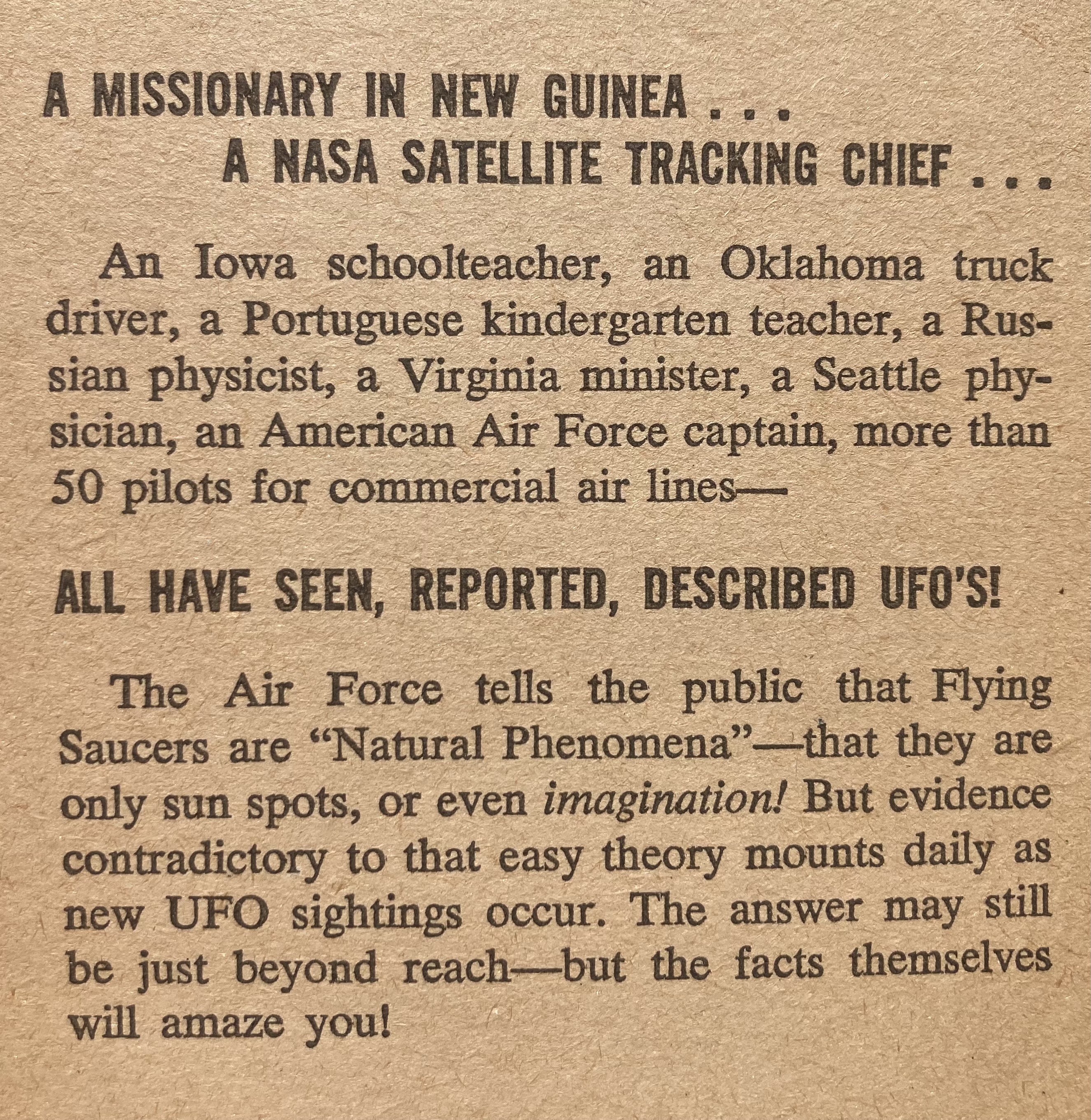
- Star Wars-like pre-title cover scroll: "Flying saucers ... UFO's ... great balls of fire! Where do they come from? What do they want? Why has the Air Force adopted a policy of silence and ridicule? Do the UFO's hold the key to man's future? DO they explain mysteries of the past? Are they only natural phenomena? Or is the planet Earth actually being visited by"
- Title: Strangers from the Skies
- Author: Brad Steiger (1936-2018). He was born Eugene Olson, which is the name on the copyright page of this book.
- Publication date: 1966
- Publisher: Award Books (A171X). The company published books between 1964 and 1977, according to the Internet Speculative Fiction Database. Its first book may have been a reissue of The Wizard of Oz and its final book appears to have been the 1977 reissue of the 1969 anthology Tomorrow's Worlds.
- Format: Paperback
- Pages: 158
- Cover price: 60 cents
- Topics mentioned on back cover: Swamp gas, blistered skin, weather balloons, balled lightning, astronauts photographing UFOs, saucers sinking into rivers, cultists and Albert Einstein.
- A few of the chapter titles: The Saucers and the "Robots" That Terrorized an Argentine Ranch; The Fiery UFO That Crashed Near Pittsburgh; The Clergyman Who Waved Hello; Helmeted Aliens Over New Zealand; The Paralyzing Force That Stalked an English Village; and Space Ship on a Minnesota Highway.
- First paragraph: "Senior Moreno! Senor Moreno, wake up!"
- Excerpt from the middle #1: "Nearly exhausted with the incredible donnybrook in which they had just engaged, the two Swedes continued on their journey, each agreeing that they should keep the story to themselves."
- Excerpt from the middle #2: "The William Denton family of Wellesley, Massachusetts announced that they had been paying regular visits to Mars as early as 1866. ... Denton's studies convinced him that the Martians had been examining our planet and had found us out as a people early in the 1800's."
- I'm sorry. What? William Denton (1823-1883) was, according to Wikipedia, "a self-taught geologist, preacher, and a promoter of occult practices such as psychometry." In "fairness" to the Dentons, what Steiger describes as "regular visits to Mars" were not via spaceship but were purportedly the result of psychometry, the idea, unsupported by science, that you can touch an object and learn its history. (I saw it portrayed once in Cathy's Curse.) In a May 2022 dissertation titled "Spiritual Matter: Nineteenth-Century Spiritualism, Whiteness, and Material Performance," Hazel Rickard writes: "The Dentons’ son Sherman and William’s sister Anne Denton Cridge all had psychometric visions of life on Mars after touching meteorites. ... As William Denton concluded: 'there are at least four distinct races of human beings on Mars,' including 'The four-digited race' described by his son Sherman, 'the dark, stunted race' described by Elizabeth and Anne, a 'pink-skinned' and 'stareyed race' described by all three, more advanced than the others, but lower than humans because they 'worship images' or statues, and the fourth 'superior race' described by Anne and Elizabeth, marked by their moral transparency, luminescence, simplicity, beauty and a 'communistic system of living' (Souls of Things, vol. 3, 276)."
- Rating on Goodreads: 3.41 stars (out of 5)
- Rating on Amazon: 4.6 stars (out of 5). It surprises me to see the rating that high. The book has been reprinted several times and seems to enjoy a good bit of popularity with modern-day readers. Steiger wrote dozens of books about UFOs and the paranormal, and this was one of his earliest efforts.
- Amazon review excerpt: In 2016, Kevin wrote: "Back, so many years ago, when I was in high school, this was one of the first books that I read about UFOs. It helped spark my interest in the subject. It was filled with sighting reports that seemed to refute the idea that all UFOs were balls of light seen at night."
- Some spacey tidbits from the Fall 1966 issue of Saucer News
- 1988 UFO Magazine: John Lennon, Gulf Breeze sightings and more
- Galactitags: The must-have accessory in the event of alien abduction
- Book cover: "The Case of the Ancient Astronauts"
- "Fate" magazine classifieds, August 1975
- Book cover plus some bonuses: "The Oak Island Quest"
- 1976 booklet on UFOs, occult from Southwest Radio Church
- Book cover: "Investigating UFO's"
- Questions, answers & mysteries with Hookland's David Southwell
- RIP Art Bell, of the Kingdom of Nye
- Three sci-fi paperback covers with UFOs (and one with a chimp)
- "Secret of the Old Museum," with tangents, footnotes & Nimoy
- Hoping to see UFOs for 1976 bicentennial Independence Day
Tuesday, June 27, 2023
Everything will be funner in July
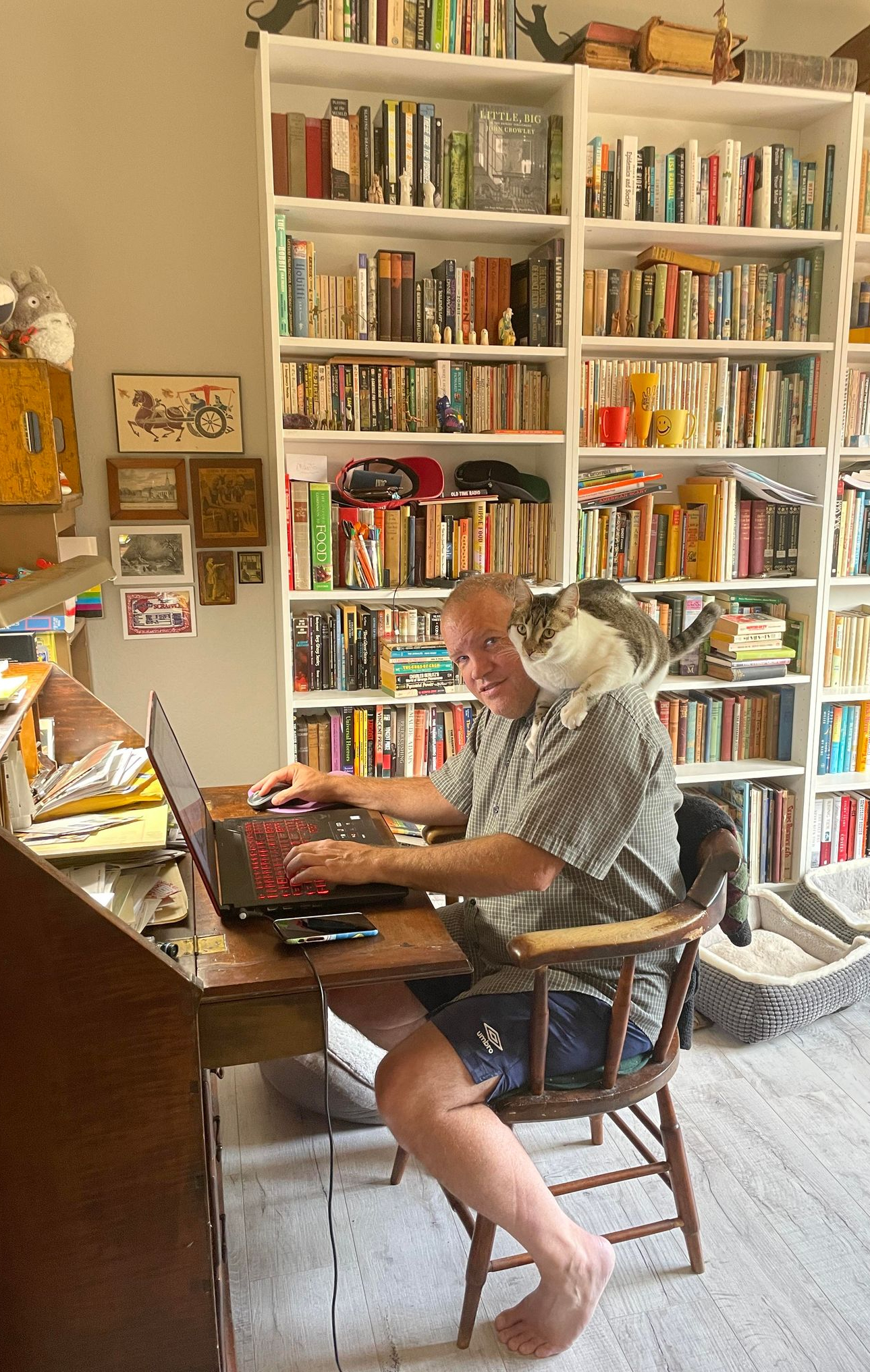
Check back for more here soon. Blog Assistant Pete is watching over my shoulder to keep me on track.
Sunday, June 4, 2023
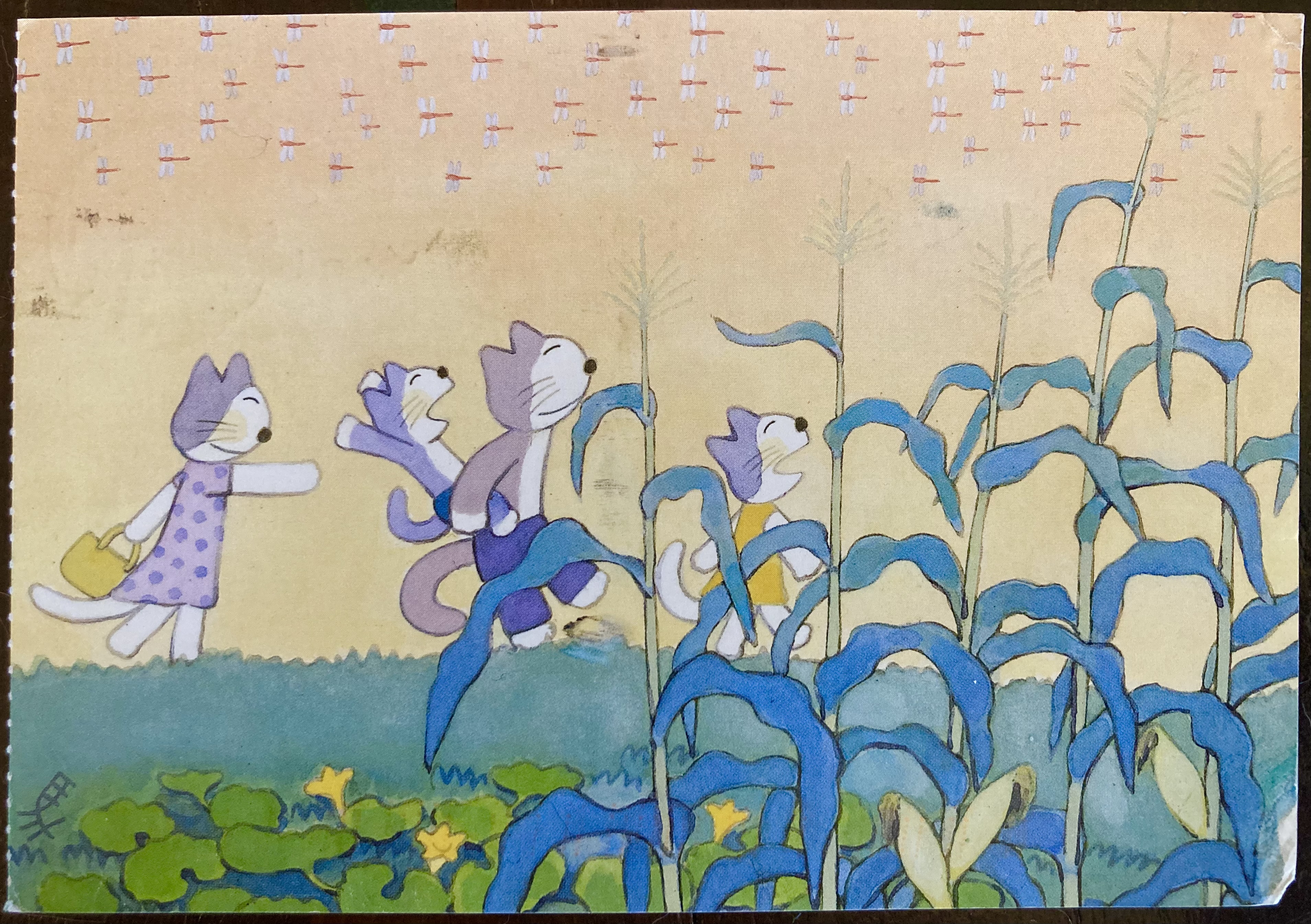
Postcrossing card from Japan with Noboru Baba art
Monday, May 29, 2023
Favorite first-time watches thus far in 2023
- Dead of Night (1945)
- Where Chimneys Are Seen (1953)
- Marjoe (1972 documentary)
- The Happiness of the Katakuris (2001)
- Synecdoche, New York (2008)
- Game Night (2018)
Sunday, May 28, 2023
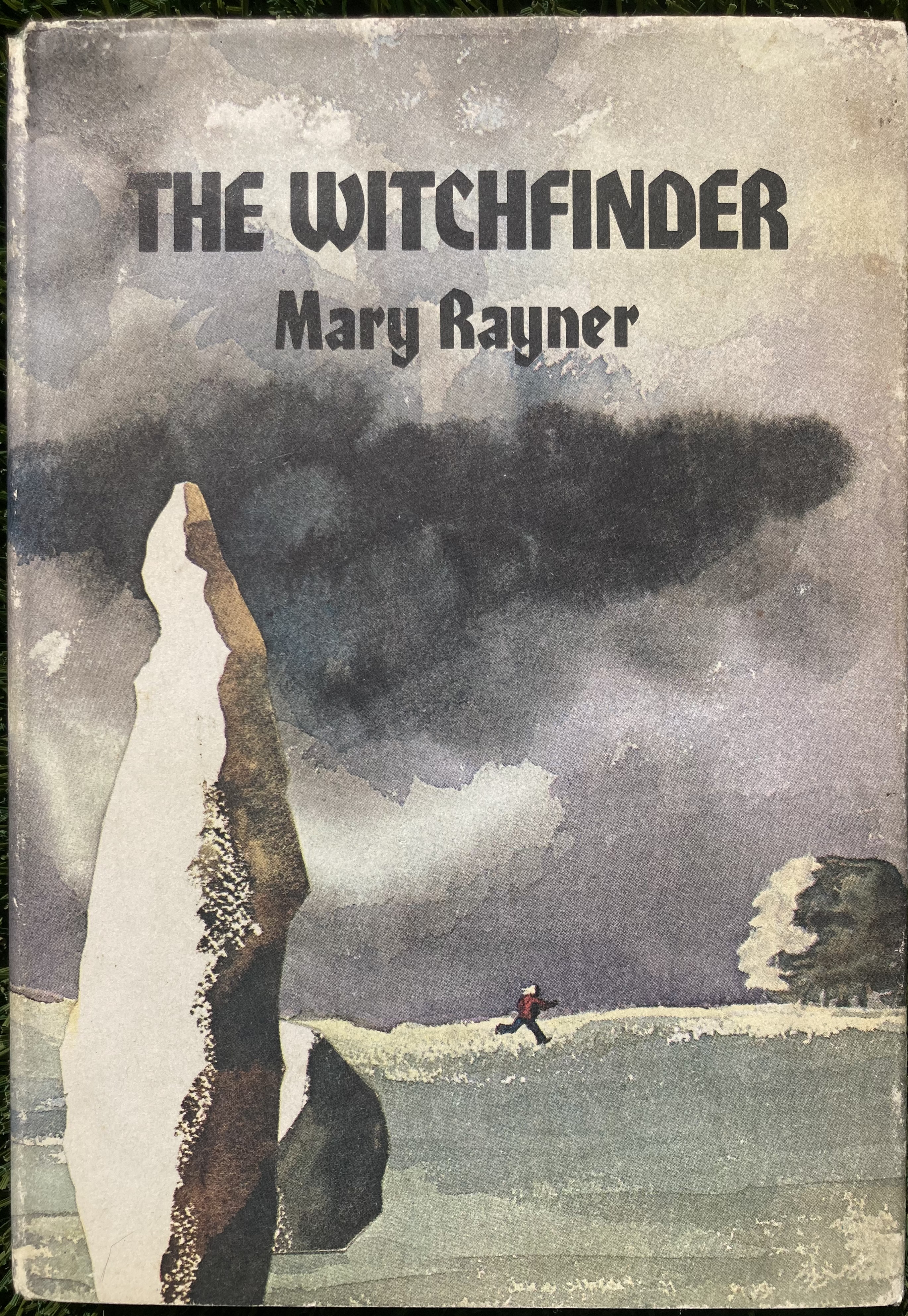
Book cover: "The Witchfinder"
- Title: The Witchfinder
- Author and illustrator: Mary Rayner (1933-2023). Unknown to me before I started working on this post, Rayner died just two months ago, in late March, at age 89. There are obituaries for her in The Guardian and The Telegraph. She was best known for the children's books she wrote and illustrated about a family of pigs. Rayner also illustrated Dick King-Smith's 1983 children's book The Sheep-Pig, which was adapted in the delightful 1995 film Babe. In 2020, Rayner published her memoir, No More Tigers, which includes an introduction by her daughter, Sarah Rayner. It's described as "a beautifully written and deeply moving account of a family who for several generations lived in Colonial Burma, and of what happened to them when World War 2 shattered their lives." Sarah Rayner has also written a number of books.
- Publication date of this edition: 1976. (The book was originally published in the United Kingdom in 1975, with the hyphenated title The Witch-Finder.)
- Publisher: William Morrow and Company, New York
- Format: Hardcover
- Pages: 160
- Dust jacket price: Not sure, because it's been clipped
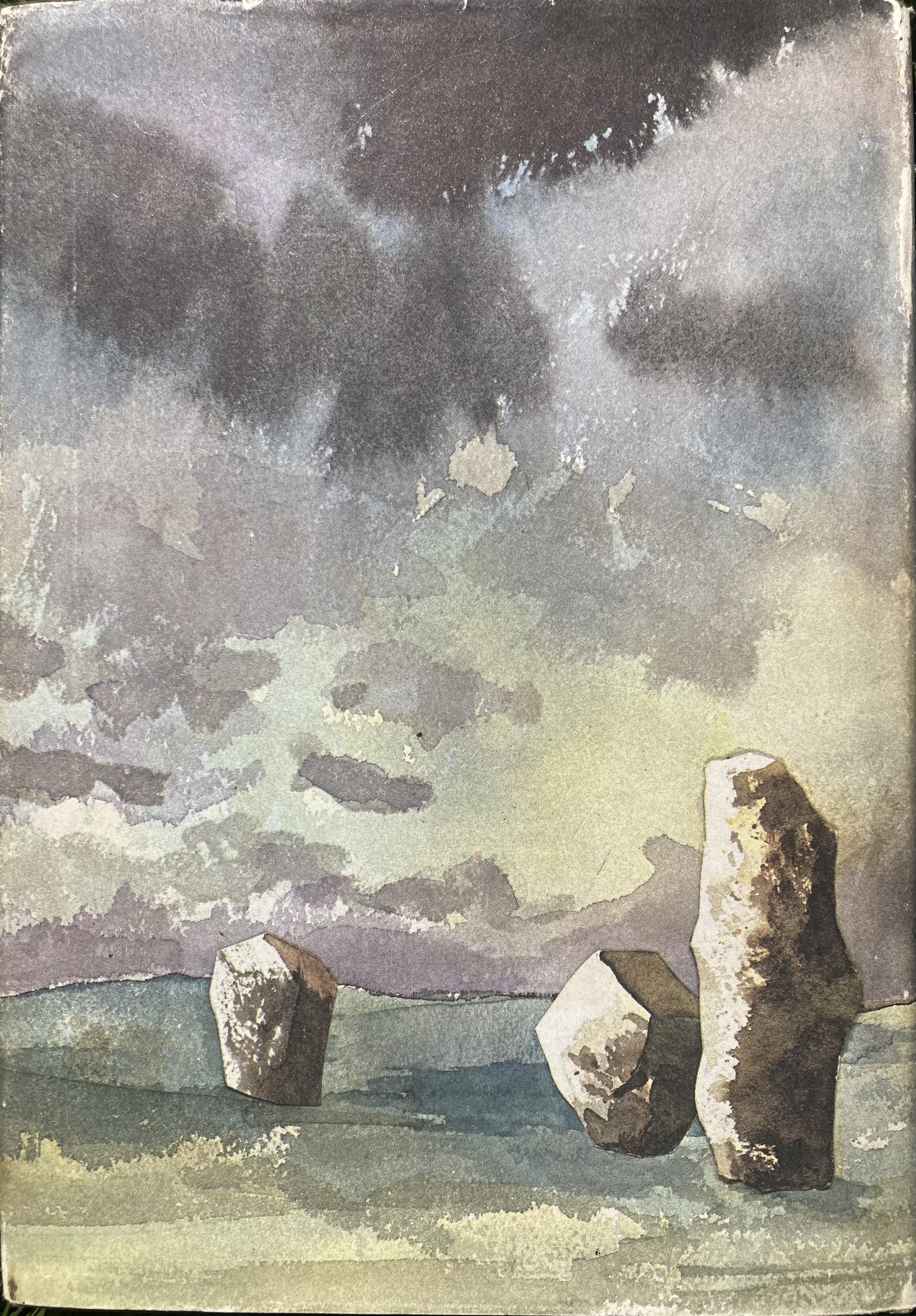
- Dust jacket excerpt: "From England comes a story of witchcraft and possession guaranteed to hold readers spellbound. The setting is a country village near an ancient circle of standing stones known as Wansbury Ring."
- Dedication: "In memory of A.H.G. and for Sarah, whose idea it was."
- About this book: In Rayner's obituary, The Guardian wrote: "Although she began by writing a novel, The Witch-Finder (1975), a tautly written family story infused with a sinister creepiness very unlike her subsequent warm and benign picture books, she had always been as interested in illustration as writing." And The Telegraph similarly stated, "Her first book, The Witch-Finder (1975), featured a young girl whose mother has fallen under the spell of strange standing stones near their home. It conveyed an unsettling atmosphere very different from the comforting happy family theme of her pig books."
- First two sentences: "Only a few yards to go. Louisa struggled through the water, her heart pumping, taking great gulps, now of air, now of water."
- Last sentence: I'm going to skip that, as it's a possible spoiler.
- Random excerpt from the middle #1: "Her mother's mocking words seemed suddenly to carry an air of menace."
- Random excerpt from the middle #2: "The shelves behind the librarian's head blurred over suddenly in thick mist, and the line of books began to rock up and down."
- Reviews: There's not much to be found online about this short novel, with its themes of UK folklore and folk horror aimed at juvenile readers. Kirkus published a short review at the time. I learned about the book through an article in issue No. 5 of the zine Weird Walk. The relevant passage: "If ancient customs were rich pickings for the burgeoning market in eerie children's tales, so too were ancient monuments. Avebury was famously used as the setting for the 1977 TV serial Children of the Stones, fictionalised as 'Milbury.' Two years earlier, Mary Rayner's The Witch-Finder had made Avebury 'Wansbury' and used the stones as a plot device to transform the central character's unfortunate mother into a witch." The Weird Walk article serves as a great jumping-off point for discovering similar books aimed at teenagers in the second half of the 20th century.
Saturday, May 27, 2023
Presto Magix for Ozark Air Lines
As a Generation X kid, Presto Magix sets were firmly in my wheelhouse in the late 1970s and early 1980s. My favorites were the Star Wars and superhero sets, of course. I also liked the historical battles, such as the Battle of Midway (which I didn't know a damn thing about), and the generic outer space panoramas featuring rockets, space stations and jetpacks.
I mostly remember getting Mom to buy Presto Magix for me at the pharmacy sometimes. They were displayed on those spinner racks that usually held paperback books. Pharmacies had a much higher "coolness quotient" in those days. That's where I got many of my Star Wars figures. They also sold baseball cards, plastic toy soldiers and those tiny paratroopers you could throw into the air and then (hopefully) watch their parachute open. And sometimes they had those Yes & Know invisible ink booklets — another Gen X treasure that deserves its own post someday. In retrospect, I'm sure our parents dreaded letting us go with them to the pharmacy.
One of the odder Presto Magix sets was this collaboration with Ozark Air Lines in 1980. They were designed to hand out to kiddos traveling with their parents on Ozark flights. It doesn't seem they made much of an impact. Unopened sets from more than 40 years ago are regularly listed on eBay for less than $10.
Ozark Air Lines was purchased by TWA in 1986 and TWA then was merged into American Airlines in 2001, so Ozark has long since fallen from most memories. But at least we still have these Presto Magix sets to tell us that it existed.
Finally, though I had to shake off some rust, I can happily report that this Presto Magix set still worked after more than four decades.Sunday, May 21, 2023
Guest post: Finally finding a "white whale" book from childhood
Mystery at Penmarth, by Ruth Manning-Sanders, illustrated by Susanne Suba. Robert M. McBride & Company, 1941 (first U.S. edition)Like many if not most of us, as a child I read with reckless abandon. Even when a book delighted me, I often forgot the title and author. I relied on my memory of its location on the library shelves to find and reread it.I came to regret my recklessness when those shelves were no longer available to me. I learned that if I wished to reread these books of delight, I had to hunt for them. Hunt I did. By recounting what I remembered of the plots to children's librarians, book-finder websites, and fellow bibliomaniacs, I have able to identify and reread those lost books. Every book but one.(tl;dr — I've found it!)A few days ago, thanks to Peggy MacEachern, book-finder extraordinaire, I learned its title and author. I have received a gift copy of the book from the incredibly generous Chris Otto, journalist and Papergreat blog-master.So I reread Mystery at Penmarth for the first time in sixty years. Spoilers ahoy! If you want to read the book without knowing more about it, stop here.Five children (delightfully portrayed in Susanne Suba's illustrations throughout) unite to form a secret society. There is most definitely a mystery for them to solve, and they solve it. There is a secret room, a message to decipher, and a mission which they successfully carry out. There is archaeology. There are ponies.No wonder I loved this book. It has everything.What I completely failed to notice reading it in childhood was how adroitly the story is told. Rebecca, our first-person narrator, keeps the minutes of the secret society meetings, which allows her to recount the stories the children are told by subsidiary characters — local gossip, ghost stories, and folk tales. Ruth Manning-Sanders is famous for her anthologies of fairy tales and folklore. I can certainly see why. The stories aren't just a source of clues for the children. Such is the author's skill, they stand on their own.Honesty is valued highly throughout the book. Although the children are truthful, the secret society is only dissolved once they carry out their final mission, something they keep a secret from the grownups. As an adult reader, I found that small secret a large part of how satisfying the story is.My memories of the story were not always accurate. The children are responsible for the fire that destroys part of the house and all of the adjacent stable. In my memory they had been unfairly blamed for it. A big part of my love for the story came from what I remembered of the children communicating with the ghost of Penmarth, but there is nothing like that in the book. Anything that could be considered ghostly is given a rational explanation. However, Manning-Sanders conveys the atmosphere and mood of the secret room vividly. It is a ghost story, as far as this reader is concerned.As I opened the book, I admit I dreaded a visit from the entity James Davis Nicholl has dubbed the Suck Fairy. Very often when a book from the twentieth century is never again reprinted, there is good reason to neglect it. Although this story is not without its embarrassments, it wasn't ruined for me.There are definitely issues of class, no surprise in a book published in 1941. The local accent is conveyed through spelling. I could ignore it, but I can easily imagine readers who couldn't. There is also at least one moment that denigrates Romani people. Probably I have missed other problems.I am delighted to be reunited with my long-lost book. Peggy and Chris, I can never thank you two enough.