Tuesday, June 3, 2014

Enjoy a couple "Best-Loved Pennsylvania Dutch Recipes"

Here, for your potential culinary pleasure, are a pair of recipes from Best-Loved Pennsylvania Dutch Recipes, a 32-page staplebound booklet published in 1971 by Vincent R. Tortora and Photo Arts Press of Lancaster, Pennsylvania.

Boova Shenkel
(Boy's Legs)

Cut 3 LB. STEWING BEEF into cubes. Cover with water. Add SALT, PEPPER, simmer 2 hours, or until tender. Drain meat and hold broth. To meat add 10 DICED BOILED POTATOES, 1/3 C. MINCED ONION, 3 T. BUTTER, 2 T. CHOPPED PARSLEY, 3 BEATEN EGGS. Mix lightly. Set aside and prepare dough. Cut 2/3 C. SHORTENING into 2 C. FLOUR, 2 t. BAKING POWDER, 1/2 T. SALT, until mixture looks like coarse corn meal. Add 3 TO 5 T. COLD WATER (enough to make dough right consistency for rolling). Roll out dough and cut 4-5 inch squares. Put about 2 T. potato mixture in center of each dough square. Fold dough over, shaping like boy's leg. Pinch edges together. Drop into boiling broth. Cover. Simmer 25 minutes. Arrange "legs" on platter. Pour broth over all. Serve.

(Besides having a creepy name, the above recipe isn't too different from the Real Dutch Lunch that I wrote about back in March. For more about this recipe, see this 2010 article in the Reading Eagle.)

Dandelion Greens
Fry 5 SLICES BACON until crisp. Drain, reserving small amount of fat. In meantime, cook DANDELION GREENS as you would spinach. When tender, pour mixture of 2 T. VINEGAR, 2 T. SUGAR over top, along with small amount BACON FAT. Crumble bacon over top. Garnish with SLICED, HARD-COOKED EGG.

* * *

Related posts

Monday, June 2, 2014

Terry S. McMahon's 1967 QSL from Merritt, Michigan


Terry S. McMahon and his spiffy ham-radio setup are featured in a photograph on the front of this QSL card that was mailed to an address in Pennsylvania back in December 1967.

McMahon, using call sign WA8OUP, was stationed in Merritt1, a small unincorporated community within sparsely populated Butterfield Township in Missaukee County, Michigan.

In the note on the back, Terry acknowledges a QSO (contact) and adds "Hope you had a Merry Christmas and have a good year."

The card is addressed as follows:
W3CUL
MARY D. BURKE
265 WAVERLY RD
NORTON
PA.
It took me a little bit, but I finally figured out that "Norton" was supposed to be "Morton," which is a borough in Delaware County, Pennsylvania.2

Part of what confirmed my research is this tidbit from the March 31, 1964, edition of the Delaware County Daily Times.
"A Morton couple, Mr. and Mrs. Alfred Burke of 265 Waverly Road, also are relaying messages by ham radio. One of the first replies the couple received was that all military personnel at Kodiac [sic] are safe."
That's a reference to the 9.2-magnitude earthquake that hit Alaska in March 1964. Ham radio was one of the best ways that people in the mainland U.S. were able to contact those in Alaska during that natural disaster, which claimed 139 lives. (For more on that topic, read the August 2012 post "Radio to the rescue — Ham operators establish link with world after earthquake" by Clark Fair on The Redoubt Reporter.)

Footnotes
1. Merritt was, for a couple of years, a childhood home of Burt Reynolds.
2. Morton was named after Sketchley Morton, son of Declaration of Independence signer John Morton.

Sunday, June 1, 2014

Great reads: Ta-Nehisi Coates' masterpiece and much more

Library of Congress photos. Links: Left, Right.

My typical approach to this space is to collect some recent links that have caught my eye and then present them for your browsing pleasure.

But, this time around, I want to take a bit more of a forceful stance, perhaps even a strident one, and strongly urge you to read this recent piece of outstanding American journalism in The Atlantic:

The Case for Reparations
Two hundred fifty years of slavery. Ninety years of Jim Crow. Sixty years of separate but equal. Thirty-five years of racist housing policy. Until we reckon with our compounding moral debts,
America will never be whole.
By Ta-Nehisi Coates

Set aside some quiet time to read it. Absorb it over the course of a few days. Plan to finish it before the end of June. But just read it.

It's an important, thoughtful piece. Set aside any preconceived notions. It relates more about American history, and who and why we are what we are in 2014, than any textbook you ever had in high school or college. (And it doesn't hurt that, as a friend said, it's just "gorgeous writing.")

I would love to see efforts by people in true positions of power and influence to get Coates' work in front of as many readers as possible. Get everyone talking about it. Make it part of the curriculum in high schools. Let it be the launching point for the kind of critical discussions and debates we need in this country.

That's my hope, anyway. Probably all that I can do is get it in front of a few new eyeballs that might have missed it. But if every one of us brought just two new readers into the fold...

* * *

More links for your browsing pleasure.

Books

History, language and learning

Images and photography

Arts and entertainment

Animals and nature

Technology and culture

Sports

* * *

Finally, take three more minutes of your time and watch this video: "Mr. G and Jellybean." You'll be glad you did.

Thursday, May 29, 2014

1891 magazine advertisement for Murray & Lanman's Florida Water


"Murray & Lanman's Florida Water is the original 'FLORIDA WATER' and must not be confounded with the numerous trashy perfumes that usurp its name..."
...states this bold advertisement from a mere 123 years ago, in the August 1891 issue of Woman's Work for Woman, a monthly magazine published by the Women's Foreign Missionary Societies of the Presbyterian Church.

Florida Water is an American cologne that was introduced in 1808 by Robert I. Murray. According to Wikipedia, Florida Water "has the same citrus basis as Cologne Water, but shifts the emphasis to sweet orange (rather than the lemon and neroli of the original Cologne Water), and adds spicy notes including lavender and clove."

Official Florida Water is still produced by Lanman & Kemp-Barclay & Co., and you can buy it on Amazon, because it's not manufactured by Hachette. According to Lanman & Kemp-Barclay, the unisex cologne has many uses. It can be added to the bath, used after a shower, used before and/or after shaving, used to cool off in hot weather, used as a perfume, used after exercise, sprinkled in the hair, sprinkled around the boudoir or just generally deployed to freshen rooms.

In fact, it's probably the only perfume that's used both in the boudoir and on the baseball field. Some swear by it. One message board poster stated in 2009: "I can remember playing baseball games in the middle of the day in July. Our coaches would soak each player with Florida Water before running out on the field. That stuff was awesome." Another poster added: "It doesn't actually do anything other than have a distinctive smell and give an additional cold sensation in water that is already cold from ice, and it's not even that noticeable. That doesn't make it any less awesome — it's one of those smells that will always remind me of playground baseball as a kid."

To way to provide the refreshing treatment for athletes, according to Wikipedia, is to "[fill] a small lunch sized ice chest with water and ice and a few caps of Florida Water. [Players] then soak rags in the tonic and wipe their pulse points and necks with the soaked rags, providing a very cooling effect to the skin and body."

Then there are the Amazon reviews for the product, some of which are quite amusing. There might even be a plant or two in there. Here's a sampling:
  • "The clove scent makes the house smell like apple pie."
  • "It's helpful for covering up the odor of my cat's litter box, so it does have uses."
  • "I'm 21 and I'm here to tell you that this isn't just for old people. I use this stuff all the time to just freshen up."
  • "What can I say. It has Florida in the Title. Which means Happiness, Fun, Sun Shine, Love and Happiness. This is Great stuff and it smells CLEAN and FRESH."
  • "My mother and I both use Florida water first thing in the morning. Me to help get in a great mood and her to aleviate her stiff knees and bursitis problem so she can get out of bed and walk without pain."
  • "Always good to have in the bathroom for any one to use."
  • "I bought some Florida Water from Amazon for both my brother and myself, and we each love it. When I wake up, after I wash my face, I splash some Florida Water on my arms, neck, and back, and I am instantly refreshed and ready to face the day. Its clean, fresh scent makes it perfect as an after bath splash. The fragrance is light, but there is still a hint of it on my skin by the end of the day. My brother says it's bracing, but not overpowering. He also finds it invigorating. This is a wonderful product at a great price, and we both plan to keep it on hand."

Wednesday, May 28, 2014

Mystery real photo postcard:
Well-dressed girl and chair


Alas, here is another real photo postcard with no identifying information.

The postcard dates to between 1904 and 1918, according to the AZO stamp box on the back. It does have a divided back (with the left side open for correspondence), so I believe that means it can be further narrowed to sometime between 1907 and 1918.

By the look of her outfit, the girl probably came from a well-to-do family. But, beyond that, she will likely remain a mystery to us. (I even tried a reverse Google image search, to no avail.)


Related posts

Tuesday, May 27, 2014

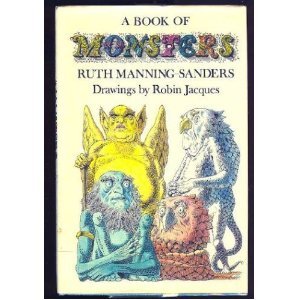
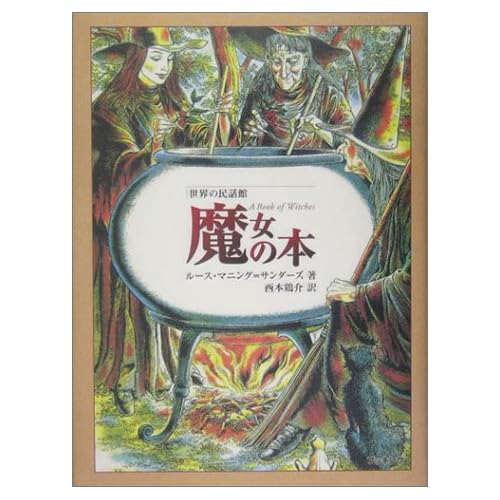
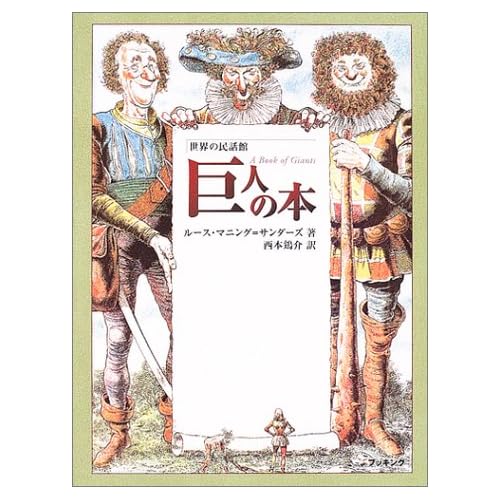
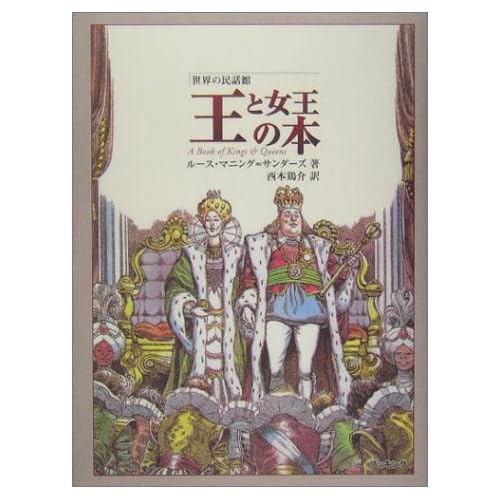
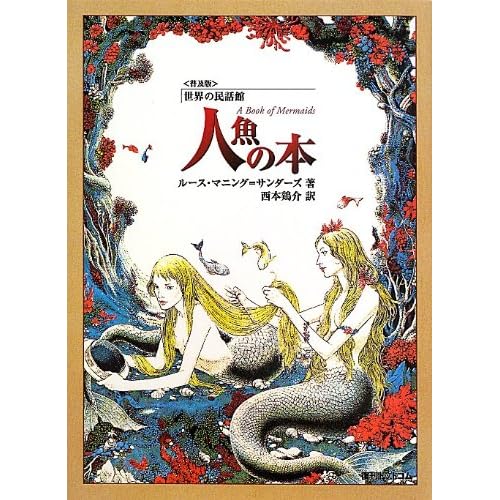
Non-English Ruth Manning-Sanders book covers

For your enjoyment (or perhaps mostly for my own), I have scoured the Internet for cover images of Ruth Manning-Sanders fairy tale books from non-English-speaking countries.

Das Buch von den Zwergen (Germany)
The title translates to "The Book of the Dwarves." This is the German version of A Book of Dwarfs. It was published in 1972 by Spectrum.

Das Buch von den Riesen (Germany)
The title translates to "The Book of the Giants." This is the German version of A Book of Giants. It was published in 1974 by Spectrum.

Das Buch von den Riesen und Zwergen (Germany)
The title translates to "The Book of the Giants and Dwarves." I would suppose that it's a combined volume of the two aforementioned volumes. It was published in 1974 by Spectrum.

Märchen und Sagen aus aller Welt (Germany)
The title translates to "Fairy Tales and Legends from Around the World." This is the German version of Folk and Fairy Tales. It was published in 1982 by Pabel-Moewig. It retained the original Robin Jacques illustrations.

Storie di draghi (Italy)
The title translates to "Stories of dragons." This is the Italian version of A Book of Dragons. It was published in 2003 by Nuove Edizioni Romane.

Storie di draghi (Italy)
The title translates to "Stories of witches." This is the Italian version of A Book of Witches. It was published in 2002 by Nuove Edizioni Romane.

A Book of Princes and Princesses (Japan)
This is the Japanese version of A Book of Princes and Princesses. It was published in 2004 as part of a reprint series whose title translates to "Folklore Museum of the World."

A Book of Devils and Demons (Japan)
This is the Japanese version of A Book of Devils and Demons. It was published in 2004. It certainly seems that those illustrations are by Robin Jacques; it might be that they have been modified from their original usage to create new cover artwork.

A Book of Dwarfs (Japan)
This is the Japanese version of A Book of Dwarfs. It was published in 2004.

I MIGHT BE IN LOVE WITH THIS COVER.

(Sadly, it appears that used copies cost about 12,177 Japanese Yen, which is about $120 in American dollars.)

A Book of Monsters (Japan)
This is the Japanese version of A Book of Monsters. It was published in 2004. I might like this cover even more than the English-language cover. It's a close call.

Here are links to more of the Japanese editions of Manning-Sanders' books. It appears that they are big fans of her work! It would be nice if we could get some English-language reprint editions of her books, to make them more accessible and affordable for today's young readers.

Monday, May 26, 2014

1910 postcard featuring lily pond at Como Park (Saint Paul, Minnesota)


This interestingly colored postcard, which was postmarked in September 1910 in Chicago, Illinois, features the lily pond at Como Park in Saint Paul, Minnesota.

Como Park Zoo and Conservatory, located across more than 750 acres, was created in 1873 and now features a zoo, a conservatory, an amusement park, a carousel, Lake Como, a golf course and a pool, among other attractions.

Here is some information regarding the park's origins from the history page of Como Park's website:
"Como Park’s history dates long before the Como Park Conservatory was constructed. In the 1840s, Charles Perry owned, grew potatoes and farmed the land around Lake Como, which at the time was named after Perry’s birthplace in the Swiss-Italian Alps, Sandy Lake. Eventually Perry moved north. A gentleman by the name of Henry 'King of Real Estate Dealers' McKenty, jumped at the opportunity to purchase the land from Perry and renamed it Como Lake after the famous Lake Como in the Italian Alps.

"At this time the Minnesota’s Legislature appointed five commissioners, 'whose duty it should be to contract for and purchase not less than five hundred, not more than six hundred and fifty, acres of land within a convenient distance of the city of Saint Paul, but beyond the present limits thereof, for a public park.'

"The idea of a public park soon became a controversial issue. Many leaders feared that the city would not be able to financially support such an ambitious park project at a time of depression. Others questioned whether such valuable land should be 'wasted' on a park.

"Professor H.W.S. Cleveland, a renowned landscape architect, urged Saint Paul and other cities to set aside land for parks before land became scarce and too expensive. In 1873, three hundred acres of land on the shores of Como Lake was purchased with $100,000 of private money."

According to Wikipedia, the lily pond shown in this postcard was "originally built in 1895 and known as the Aquarium. [It] featured exotic lily pads. While the lily pads returned to Como Park at the conservatory in 2005, the original pond has been dry and unused for some time."

Other historic structures or elements of the park include an abandoned concrete pedestrian bridge over former street car tracks, a comfort station with "prairie style restrooms" that was opened in 1917 and renovated in 1998, a granite frog within a frog pond, a bust of Henrik Ibsen, and a Submariner's Memorial (pictured at right) dedicated to the lost crew of the World War II USS Swordfish.

This postcard was addressed to Jacob Shuey of Harrisburg, Pennsylvania, and has the following message:
"Chicago. Sep-20-10
Arrived here at 930 this morn. Will leave here for Pittsburg Penn. this P.M. at 315 but will hardly get home before the early part of next wk. Hope Grandma is not suffering yet. Will you please tell Goldie Wolf [?] if she has no more money for flowers that you can help her out with the last deal [?] — & oblige me love to Mother & Father & Addison. Mrs. Parker."

Sunday, May 25, 2014

Drawing tucked away inside "Tapping the Dream Tree"


These are the things we leave behind...

This drawing, scrawled on a 4x6 index card, was tucked away inside a used copy of Charles de Lint's story collection Tapping the Dream Tree.

Also, for what it's worth, here's a conversation I overheard while in the bookstore where I found this piece of ephemera:
Mom: You going to get a book?
Teen daughter: I don't read.
Mom: I'm going to smack you in the back of the head with a book. You read all the time! ... Even when you do math, you read.
Related posts