Friday, January 9, 2015

Swinging Bridge in York, Pa. (And you thought your commute was bad)

(Click for a larger image)

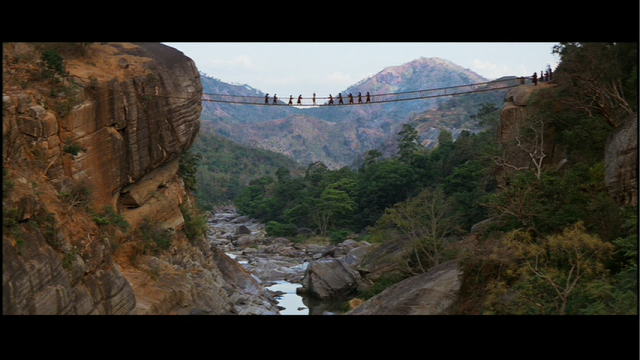
This postcard, probably circa 1908-1910, features the delightful "Swinging Bridge" over the Codorus Creek here in York County, Pennsylvania.

Another view of this rickety-looking bridge appeared here last summer. And you can see that it was not a short jaunt. But it saved time, and that's what was important. Apparently. I know some people who probably would have walked 10 miles around to avoid this bridge.

According Jim McClure's York Town Square blog, this bridge provided a shortcut for workers traveling from North York to York Safe & Lock.

McClure also notes that Raymond Sechrist wrote about the bridge in his 1991 memoir Skinny Dipping in the Codorus. Here's an excerpt:
“A swinging bridge is just a two foot wide board about wide enough to walk on. There were cables on each side to hold on to as you go across. ... When you would get to the middle and somebody would come from the other way, you just had to stand aside and hold the wire and let them squeeze past, before you could continue on. ... We kids would go up there on that swinging bridge in the summertime and, in between working hours, we’d dive off of the bridge into the creek or we’d make it swing. You couldn’t swing it much, but a little bit."
I'm pretty sure that description doesn't improve the appeal for people who dislike bridges ... and especially dislike swinging bridges.

But it's not like it was a long way down. And bridge-goers were rarely being chased by sword-wielding baddies.

As a final note, this postcard, which was never used, was published by J.G. McCrorey & Co. and was made in Germany.

Thursday, January 8, 2015

Nightmare fuel: Covers of two "children's" booklets with clowns

These two staplebound booklets were inside a box titled "Little Dots for Little Tots," published by The Platt & Munk Co. in 1939. Both booklets feature connect-the-dots puzzles. Piffle is the name of the clown. Or at least that's what he says his name is. We know that some of these clowns can go by several names.

Piffle's Pastime Dot Drawing Book


Piffle's Mother Goose Dot Drawing Book
Horrifyingly, it's not even clear that Mother Goose realizes there's a clown behind her. Just imagine: You're minding your own business, flying high on a nice goose. And suddenly you turn around AND THERE'S A FREAKING CLOWN BEHIND YOU.

Wednesday, January 7, 2015

Two sketches of women inside an old schoolwork binder

This is a post that has me remembering and reminiscing back nearly four years to the Old Geography Book Doodles, Part 1 and Part 2.

Instead of being inside a textbook, today's sketches/doodles are inside the two-ringer binder (pictured at right) of a long-ago student.

The printing on the front of the binder states "VALOR LOOSE LEAF NOTE BOOK." It is filled with the handouts and notes belonging to Esther Koontz in the mid to late 1940s.

The wide variety of topics she studied includes:
  • Eighteenth century English poetry
  • Hamlet
  • Book reports on Anne Snow, Mountain Nurse; Dynamo Farm: A 4-H Story; and The Dim Lantern
  • A vocabulary unit that included admonition, carcass, confederate, consternation, contrivance and decorum
  • Macbeth
  • Vegetables (including 38 study questions)
  • Home Economics (Breadmaking, frozen desserts, table centerpieces and cake baking)
  • Making a tuffet (it took 122 hours and cost $16.26 in materials)
  • The Federal Reserve System
  • Names of some important newspapers
  • Democracy
  • Conservation and reclamation
  • Taxes
  • Colors
  • Introductory drafting
  • History of health

Compare and contrast that to some of today's secondary school curriculums. Better yet, don't. You might become depressed.

At least, through all of this impressive and (mostly) useful learning, there was still time for doodling. Here are the two illustrated pages from the back of the binder. These were done, apparently, by Kathryn Shoemaker, not Esther.


Esther and Kathryn, by the way, were likely from the nearby area of Hanover, Pennsylvania. Both of their names appear in an April 1949 edition of The Evening Sun, Hanover's newspaper.

Tuesday, January 6, 2015

1916 inscription from the Lincoln Motor Cycle Club of York


OK, this is kind of cool. (But, then, isn't everything here?) On the inside front cover of the abundantly titled Caricature: The Wit & Humor Of A Nation In Picture, Song & Story, there in a 99-year-old inscription for a York, Pennsylvania, organization. It states:

This Book is the
property of the
Lincoln Motor Cycle Club
223 W. Market St.
York, Pa.
Received Jan. 24, 1916.

The book, which is sadly in tatters, has more than 40 illustrators, according to the credits, and was published by Leslie-Judge Company of New York.

I have no information or history regarding the Lincoln Motor Cycle Club; that might require some outside help.

The best part of this book, besides the inscription, are the illustrations, some of which are in color. The faces are especially fabulous. Here's a gallery of some of my favorites...


Note: This left side of this final image has been cropped off, as it was torn.

Sunday, January 4, 2015

Old postcard featuring Markleton Sanatorium in Somerset County, Pa.


This postcard was sent from Markleton, Pennsylvania, in Somerset County. Markleton, which once had a railroad station, is now nothing more than an unincorporated community/hamlet. It's not far from Mount Davis, the highest point in Pennsylvania.

The postmark appears to be May 12, 1919 (though it's a little faded). It was addressed to Mrs. Appleton Berger of Foltz, Pennsylvania. The message is written in ink, in small, tight cursive writing. And, interestingly, it is written upside-down, with relation to the orientation of the postcard and the address. Here's the message:
Mon P.M.
I know you are busy but I was mad this morning when Russells second letter came back. Here I have been sending telephone calls, special delivery letters etc after him all wekk and he has been at home and none of you fellows could even drop me a card. I was on the verge of going to Pgh. for the parade but thot I'd better not risk it as I had not heard definitely from you, but of course I supposed he had gone to Camp Shermas [?] as I did not hear from you. The operator at Rockwood said she could hear Edna fine this morning, but our line must be out of whack for I could not. Am relieved to know that Russell is home for I was beginning to think something had happened to him.
I'm not sure that the unidentified writer of this postcard was actually a resident of Markleton Sanitorium. According to the Asylum Projects wiki, the facility closed on March 27, 1919. And, as mentioned, this postcard appears to be from May 1919. But perhaps it took some time for everyone to get moved out of the hospital.

Here's some information on Markleton Sanitorium, from Asylum Projects:
"Markleton Sanatorium was originally a private hotel-like sanatorium where guests would visit for relaxation as well as treatment from every day 'illnesses' like stress. The sanatorium would later be converted for use by the US Army as a tuberculosis sanatorium. The sanatorium was situated on the main line of the Baltimore & Ohio Railroad, between Cumberland and Pittsburgh. It was nestled among the mountains at an altitude of 1,700 feet, which shut it in on both the east and the west, and was, therefore, not exposed to the cold winds of the winter. Its main building was a five-story, steam-heated, brick structure, with north and south frame wings, each of which was 150 feet long. Water was supplied from numerous springs high up on the mountain side. The sanatorium had baths of salt, electric, Turkish, and vapor."
I wonder if the building is still there. I think a 2015 road trip to Somerset County is in order. The greater Markleton metroplex sounds like an interesting place for exploration.

Saturday, January 3, 2015

Mystery weather photo from 1915


Here's a mystery weather photo. I'm not even 100 percent sure what I'm looking at here. On the back, there is a maddeningly incomplete caption, written in pencil...

22 June 1915
Hail Storm out of

Out of where?

Somewhere in Maryland, almost certainly. There was a historic and well-documented hail storm across that state on June 22, 1915. Here are a couple tidbits:

This photo, while documenting part of the hail storm, clearly does not show any of the larger stones or worst damage from the day.

Related post: Old photo stirs up a blizzard of mystery

Friday, January 2, 2015

Mannikin Spanalong and some thoughts on 2015


This is Robin Jacques' illustration of "Mannikin Spanalong" from the tale of the same name in Ruth Manning-Sanders' A Book of Sorcerers and Spells. Our family has always enjoyed the story and it's diminutive folk-tale character.

I post his image not because I occasionally feel as weary as this bearded fellow looks (I do), but because I've dabbled in writing my own tale featuring Mannikin Spanalong. It's a tale that involves castles, magic, books and adventure in mid-20th century Europe. But it's also a tale that I haven't gotten very far on.

I'm decent at ideas. Not so decent at following through.

I have, in fact, an embarrassingly long list of unfinished short story, novel and screenplay ideas, in addition to the Spanalong tale. Here are most of them, laid bare for the whole world to see (and for anyone on the Internets to steal):

  • A biography of Ruth Manning-Sanders
  • A screenplay inspired by the life of Ruth Manning-Sanders
  • A collection that has, in my head, always been titled York County Wonder Tales and features folk tales reimagined in an alternate, medieval-era Pennsylvania
  • A non-fiction guide to off-the-beaten-path locations in Pennsylvania
  • A post-apocalyptic tale that's equally inspired by Blue Highways, The World Without Us, and the American Guide Series
  • A novel involving a mysterious figure who has settled down to a quiet life running a small-town bar
  • A screenplay inspired by the life of late-night radio host Long John Nebel
  • A story involving a rock band and time travel, told in the style of Citizen Kane
  • A futuristic tale of a retirement village in which technology makes it difficult to differentiate between reality and fantasy (I have also imagined this one as a graphic novel, which is pointless, because I cannot draw)
  • A different post-apocalyptic tale, featuring a lone radio operator living on a mountaintop and battling the elements
  • A story about a photographer who discovers a way to photograph ghosts, and that technology's implications
  • A novel or screenplay very loosely based on the song "Levon," set in the 1970s and featuring some elements reminiscent of Something Wicked This Way Comes
  • A science-fiction tale called "The Last Farm"
  • A sprawling fantasy epic about a girl named Ruh who travels the lands documenting history and folklore, while slowly learning her true purpose
  • An origin tale for a secret or magical university. A place like Hogwarts had to have a beginning, right? Who laid the first stone, hired the first teacher and wrote the first syllabus?
  • A goofy vision for a science-fiction/fantasy mashup called Christmaswöld and possibly involving an anthropomorphic Rudolph. (OK, OK, I'm done now. My ideas have officially jumped the shark.)

If even one of those ideas ever makes it to completion, it would be a minor miracle. The problem, other than procrastination and lack of initiative on my part, is time. The amount of free time I have in a given week or month is fairly puny. And much of the free time I do have goes to this blog. I would estimate that I spend three to five hours per week researching and composing Papergreat posts.

That adds up.

As a fun mathematical exercise, I would estimate, conservatively, that I have spent 68,850 minutes working on Papergreat posts since late 2010. (1,530 posts times 45 minutes per post). That's nearly 1,148 hours. Or 47.8 days. Or 28.7 standard 40-hour work weeks. Phew!

This is all a way of saying that if I'm ever going to accomplish some of my other (hobby) goals in life, such as writing something worthy of publication and reading more books, I probably need to spend less time with Papergreat.

So it's likely that at some point in the near future I will scale back my posting frequency. (I had more than 400 posts in both 2013 and 2014, which is a bit of a ridiculous pace.) Maybe I'll write fewer posts, but make them longer and filled with more ephemera. Or maybe I'll increase the frequency of "quickie" posts, which take less time.

Something will change, so that I can devote more energy to other pursuits.

The good news is that I believe that I've churned through a lot of great material and accomplished many of my ephemera-blogging goals through the first 1,500+ Papergreat posts. Sure, I have a zillion incredible vintage postcards that I still want to share with you each week, and I will continue to do so. But, beyond that, my personal to-do list for the blog has dwindled down to:


So you might see some significant changes here in 2015. But you haven't seen the last of me. And maybe, just maybe, I'll have some exciting news to share with you sometime in 2016. Let Operation Spanalong commence!

The holidays are over. Don't forget to send your thank-you notes


One of the topics that comes up here on occasion is the lost art of writing letters and postcards. That can also include thank-you cards. I suspect the percentage of people who send them has dropped precipitously in the past quarter century.

This is a thank-you card that I sent, with the help of Mom, to my grandmother1 (who we called "Beembom," thanks to my pronunciation issues) in December 1976, right around the time I turned 6 years old.

Things we learn from the below note:
  • I had an odd problem in which I wrote some of my numbers backwards.
  • Even then, I loved books.
  • I WAS AN ALL CAPS KIND OF CHILD.


Footnote
1. Other posts mentioning my grandmother: