Tuesday, April 4, 2023

Swords & sandwich flags of the 1970s

I saw this ridiculous reminder of the 1970s on eBay and it spurred a nostalgic and fun conversation with Wendyvee of RoadsideWonders.

Nevco's Sandwich Flags are just that — little flags to place on sandwiches at gatherings so that people will know what's what. Because otherwise how would the people of that era have known the difference between a peanut-butter-and-jelly sandwich and a turkey sandwich?

These Nevco flags allow sandwiches to be marked as turkey, shrimp, ham, olive & egg, sausage, jelly, bologna, salmon, cheese or bacon, lettuce & tomato.

Think how many picnics and baby showers were saved by these flags!

Imagine your Aunt Ethel buying these at the A&P!

Wendyvee said, "My paternal grandmother would have been over the moon with these." Her grandmother also deployed both those toothpicks with the colorful plastic at the end (I learned they're called "frill picks") and those little plastic swords around the house. "Not on special occasions or anything ... just with a regular lunch or nighttime snack," Wendyvee added. "When I was little, I thought that this meant they were rich."

I have two recollections regarding the little plastic swords. First, I'd stash them away, thinking I could use them with my Star Wars figures. Turn Han Solo into a pirate or something.

Second, we got them when the family went to the Wagon Wheel in Montoursville, Pennsylvania. As I wrote in a 2018 post: "Our family went there often when we were living on Willow Street. Sometimes we'd have dinner there. I would get a Howdy Doody to drink and Adriane would get a Shirley Temple; they were both the same thing — 7 Up with grenadine, I believe. What I remember most are the arcade games and the jukebox. After we ate, Mom and Dad would hang out with friends at the bar and give my sister and I a supply of quarters for the small game room."

The Howdy Doody/Shirley Temple would come with a maraschino cherry pierced through by a plastic sword. 

On this topic, Wendyvee said, "I remember being on vacation at the shore when I was little. Even though I liked Shirley Temples better, I used to ask for a Roy Rogers just so that my drink wasn't the same as my sister's drink."

Wait, I asked, are these alcohol-free "cocktails" for kids different? First, I turned to Wikipedia. 

Roy Rogers: Cola, grenadine and a maraschino cherry. It's the boys' version of a Shirley Temple. It's possible that Rogers himself didn't drink alcohol, and so this was his drink of choice at business meetings.

Shirley Temple: Ginger ale or lemon-lime soda with grenadine and a maraschino cherry. Alternately called a Kiddie Cocktail.

I'm not, however, finding any references online to Howdy Doody being used as a Kiddie Cocktail name. Did anyone else get this in the 1960s, 1970s or early 1980s? Maybe it was only a regional thing, but I can't be the only one who ordered this as a kid. If so, at least it's recorded here for posterity. Let the historians of obscure history rejoice. Stick a Nevco flag that says "WEIRD" in this post.
Sunday, April 2, 2023

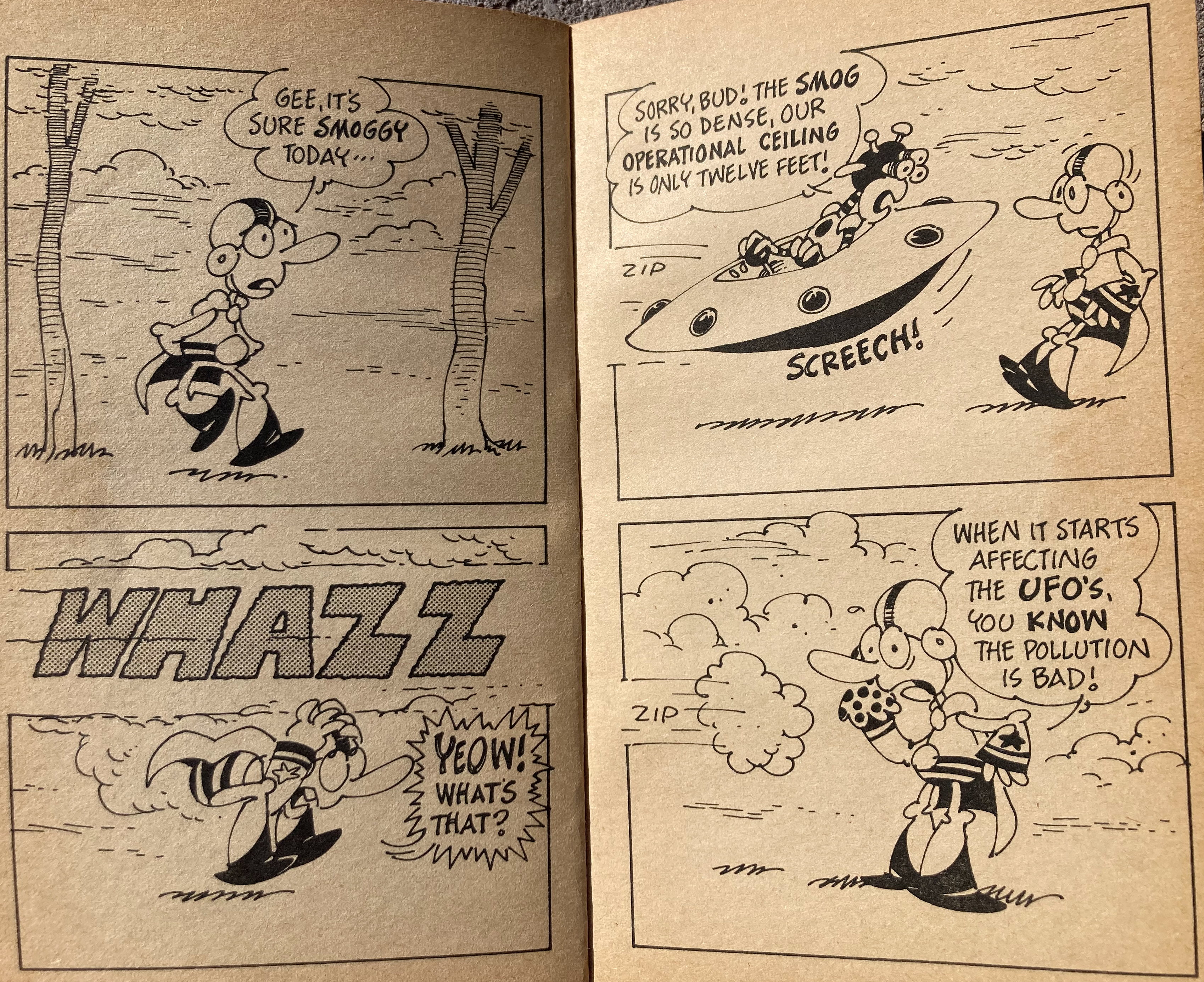
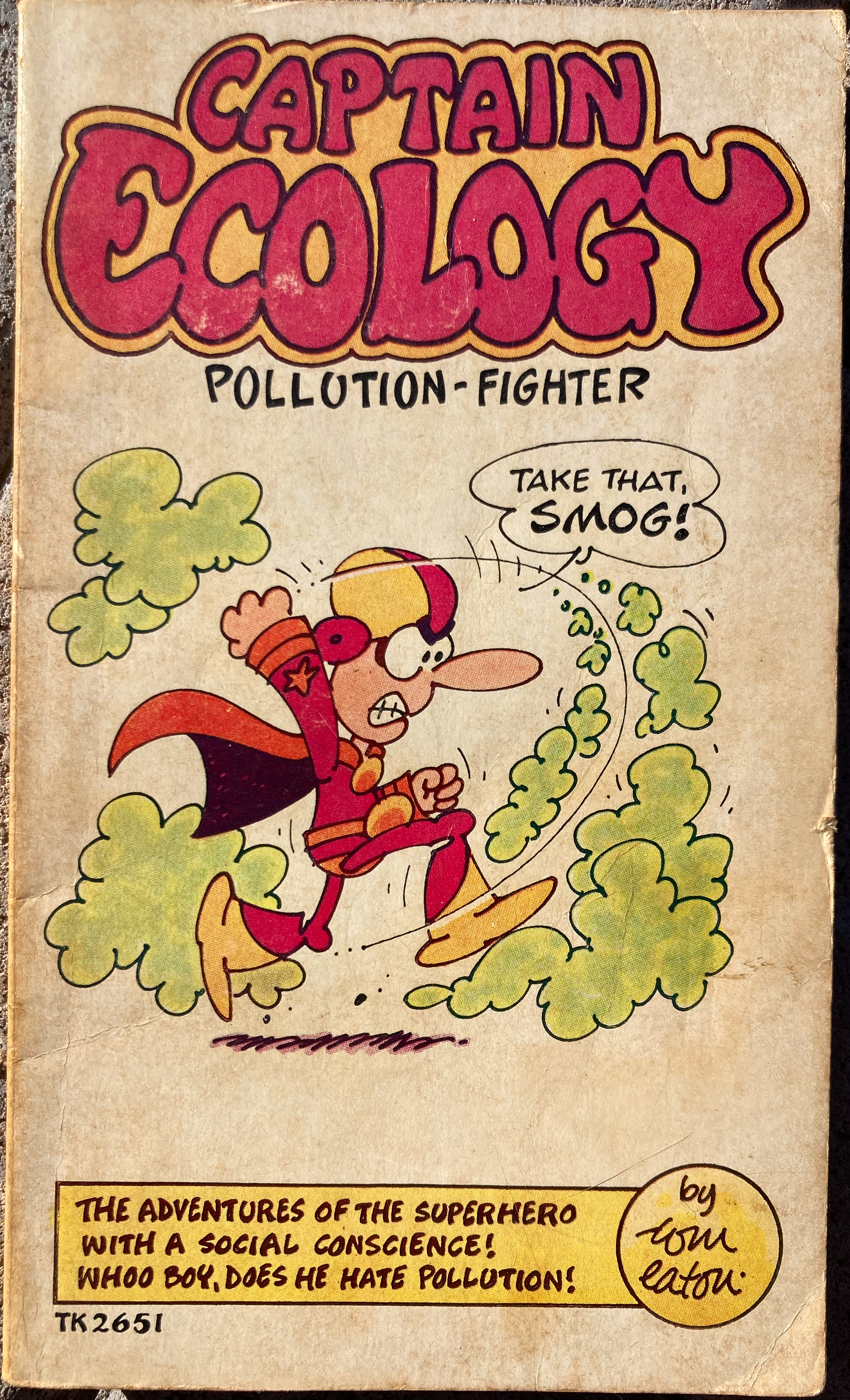
1974 Scholastic book: "Captain Ecology, Pollution-Fighter"


This Scholastic book by Tom Eaton, Captain Ecology, Pollution-Fighter (TK2651 of 1974), sought to use humor to help instill compassion and concern for the environment in schoolchildren who were too young to tackle Silent Spring

Captain Ecology takes on the topics like people tossing garbage from their cars, wasteful consumption, giant corporations, vehicle exhaust, smog, pollution-spewing factories, solar power and single-use packaging. He even takes jabs at the mindlessness of television, including the barrage of commercials urging kids to consume, consume, consume. Heady but important stuff for kids in elementary and middle school.

Tom Eaton, who died in 2016 at age 76, was best known for the comics and illustrations he provided for Boys' Life magazine for three decades, starting in 1984, including “The Wacky Adventures of Pedro,” “Dink and Duff” and “Webelos Woody.”

Boys' Life art director Joe Connolly said Eaton “never missed a deadline or made excuses. He is one of the most important contributors the magazine ever had.”

After Captain Ecology but before Boys' Life, Eaton did a comic strip called "Oliver Cool," which is highlighted in this 2021 post on the Who's Out There? blog.

In a 2005 review of Captain Ecology, Pollution-Fighter on Amazon, Andre writes: "I have fond memories of this book. It was in my classroom at Moultrie Middle School near Charleston SC in 1977 when I was in 7th grade and I read it frequently. It was a tough school filled with bullies at the time and this book brought me some needed relief. Basically, it's the somewhat comical adventures of a cartoon crime fighter who tries to protect the environment. Pretty amusing, as our man is often more well intentioned than successful. But near the end, the book takes a serious turn as our man closes by brooding about the fate of the planet. Worth a read for your kids and for you to have a discussion with them about when they're finished. If you like this, I would also recommend Tom Eaton's Book of Marvels that was also in my classroom at the time and that I enjoyed so much that I ordered it again 25 years later. Tom Eaton was a pretty underrated cartoonist who brightened up a pretty dark time in my life."

It's inspiring to see all the ways Eaton entertaining, encouraged and educated young people over the many years of his cartooning career.

Meanwhile, Captain Ecology wouldn't be happy this March 20 news. (Nor should any of us be.)
SARAH KAPLAN
THE WASHINGTON POST
"The world is likely to pass a dangerous temperature threshold within the next 10 years, pushing the planet past the point of catastrophic warming — unless nations drastically transform their economies and immediately transition away from fossil fuels, according to one of the most definitive reports ever published about climate change.

"The report released Monday from the United Nations Intergovernmental Panel on Climate Change (IPCC) found that the world is likely to surpass its most ambitious climate target — limiting warming to 1.5 degrees Celsius (2.7 degrees Fahrenheit) above preindustrial temperatures — by the early 2030s.

"Beyond that threshold, scientists have found, climate disasters will become so extreme that people will not be able to adapt. Basic components of the Earth system will be fundamentally, irrevocably altered. Heat waves, famines and infectious diseases could claim millions of additional lives by century’s end."

Sunday, March 26, 2023

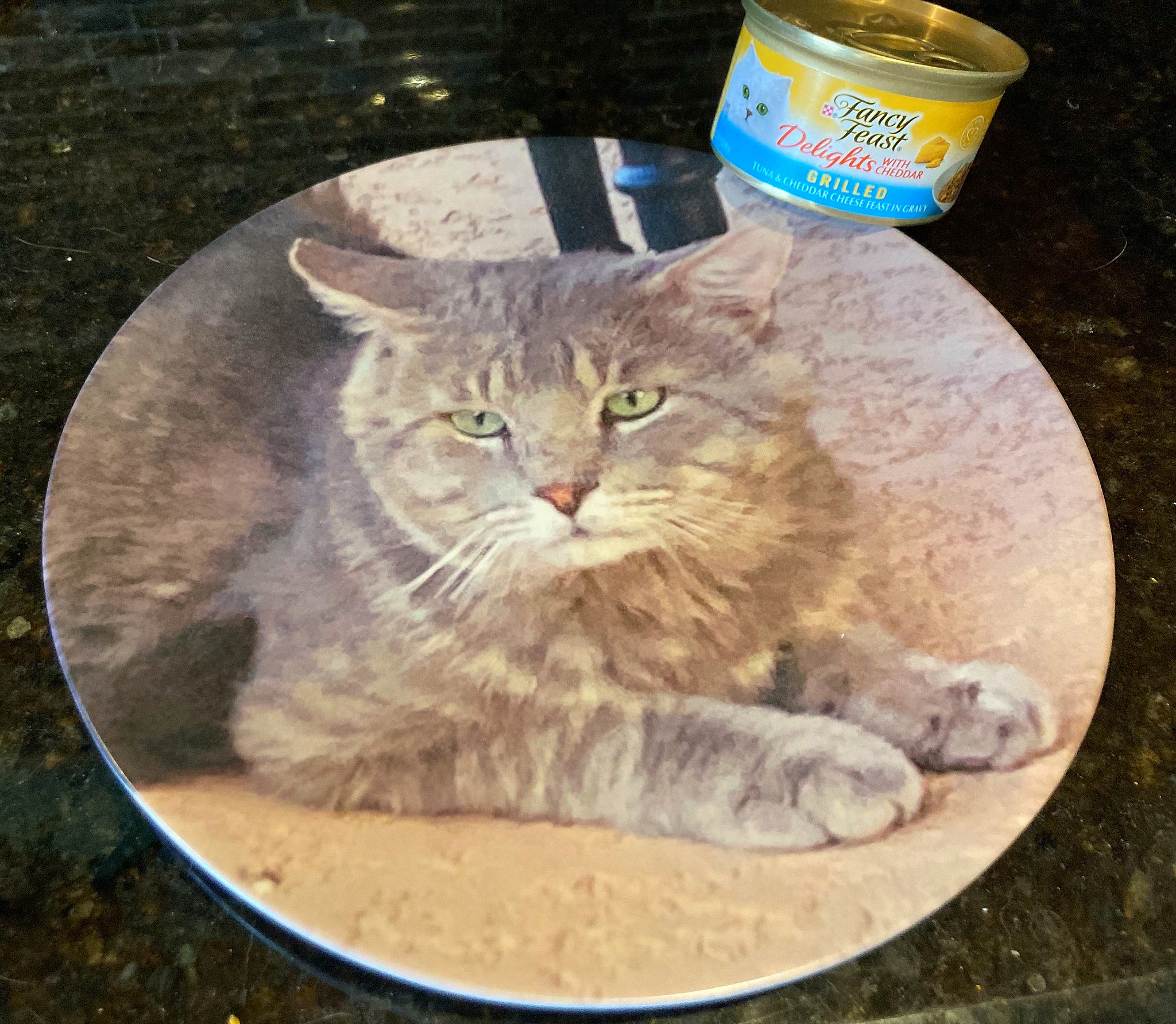
Big Boi's special dinner plate

Can a plastic dinner plate be ephemera? One of my arbitrary rules for ephemera is that it counts as ephemera if you can fit it in a 9x12 manila envelope. So, at 8 inches wide, I think the plate pictured above would count. It's ephemera. So I'll write about it.

Let me backtrack a bit. This morning's post got me thinking about the evolution I've gone through during the pandemic. During the first year or so, especially when we were living in Pennsylvania, I was very focused on observing and feeding the wildlife in our backyard: the birds, squirrels, chipmunks, rabbits and night-time raccoon invaders. We spent a lot of money on peanuts.

Once we moved to Arizona, though, things changed. Now I have officially become Crazy Cat Dad. We have some semi-feral cats roaming our neighborhood, and once we became aware of them, they quickly became aware that I'm a sucker who will give them food in an attempt to help and befriend them.

So that's mostly why, as I write this, there are 19 cats inside my house.

In my defense, five of them are houseguests who are here temporarily from Washington state.

So my true level of Crazy Cat Dad is that I take care of 14 indoor cats. That's a much more reasonable number, right?

On the other hand, I'm currently feeding a total of 25 cats:

Indoor permanent residents (14): Banjo, Titan, Monkey, Orange (Mommy), Toffee, Panda, Bandit, Smoky, Spice, Autumn, Nebula, Bounds (Osmond Portifoy), Socks and Dusty.

Indoor houseguests (5): Pengin, Phantom, LP, Ice Bear and PT.

Outdoor tomcats (4): Big Boi, Creamsicle, Fjord Nubbins, Doppler (Ratto).

Outdoor female who had kittens a few days ago (1): Mamacita (Mommycita).

Outdoor female who is going to give birth any day (1): Cirque de Soleil.

That's 25, right?? It gets more complicated by the day. I don't know where Mamacita's kittens are, which makes me sad. But she stops by most nights for short visits and I try to give her priority feeding because she's nursing. She really loves cheese.

I am really, really, really hoping that Cirque has her kittens here in the yard, so I can help and protect all of them. (And eventually get them adopted out, so the feral community doesn't continue to multiply any more than it already has.) We might try to trap her, but (1) we're already dealing with a lot of cats, (2) recent trapping attempts have gone badly (for me).

So that brings us back to Big Boi, who we've known since around January 2022. He's the King Tomcat of this territory. He is a large boy. Big Boi and Orange are the parents of Toffee, Panda, Bandit, Smoky, Spice, Autumn, Nebula, Bounds, Socks, Dusty, Pengin & Phantom. Big Boi is also likely the father of Creamsicle, Fjord Nubbins, Cirque de Soleil and possibly even Doppler, who is now among the younger males trying to usurp him. 

Big Boi, once the toughest dude on the block, has taken a beating in a lot of fights lately and is starting to show his age. So I try to give him special treatment. For awhile, the sides of his head were so raw that he had trouble eating out of the plastic bowls we put outside. And that's where the plate comes in. It's much easier for him to eat from a plate than a bowl. So, rather than use one of our good plates, I got a special one for him through Shutterfly. It has a picture of him that was taken last year, when he had two good ears and far fewer scars.

He just sits by the door when he's hungry. I'll take his special plate outside, show it to him and talk nicely while dishing out the food. Then he comes over and eats happily from it. 

Yes, this plate would fit in an envelope, but I hope I don't have cause to put it into one for a long, long time.

Ephemeral reminder of what we've been through

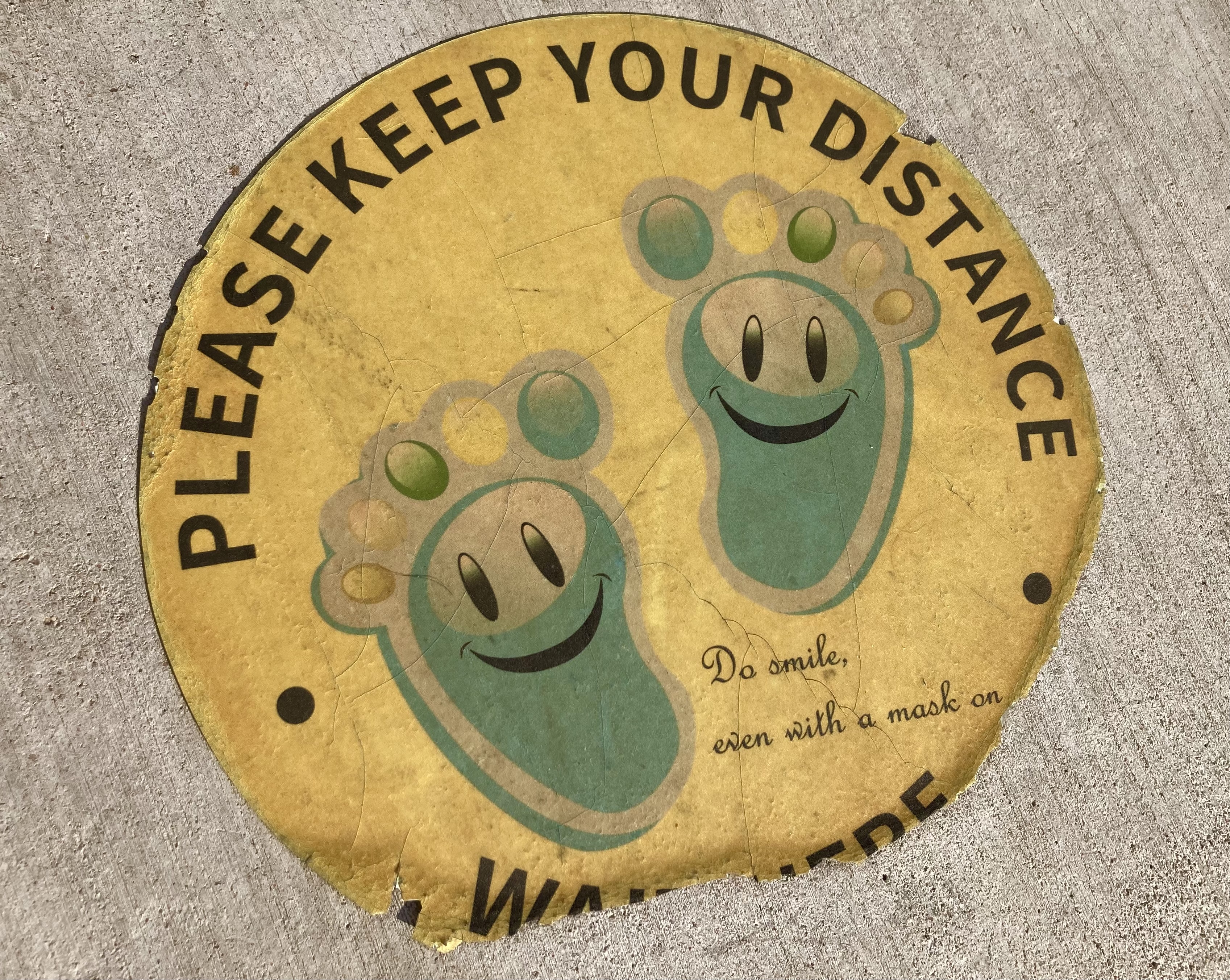
I spotted this on a sidewalk in Chandler, Arizona, yesterday and snapped its picture for posterity. We obviously will have no lack of somber reminders in the coming decades of what the COVID-19 pandemic, which is now more than three years old, has wrought. It's had one of the most devastating impacts in American history. (And, to be clear, the pandemic is not "over" until its end is declared by the World Health Organization, something that is tentatively expected to happen later this year.)

One of the small things we'll remember are these "keep your distance" circles that were ubiquitous in grocery stores, public spaces, checkout lines, etc. The circles themselves will fade, peel away and vanish over time. Photographs and memories will remind us of them. 

Twitter, if Elon Musk doesn't complete its destruction, offers a fascinating repository of the psychogeography of COVID-19, especially on the hashtag #covidstreetarchive. It is filled with vernacular photos of signs, graffiti, displays in front of homes and businesses, empty streets and buildings, discarded masks and gloves, and more. (I'm sure there are other similar hashtags.)

Papergreat pandemic posts, from oldest to newest

In curating these, I was fairly stunned to discover that, before today, my last post to mention COVID-19 was on August 21, 2021, and my last post to use the word "pandemic" was on September 13, 2021. Of course, I took a long break from blogging and have only had about 120 posts since autumn 2021. But I think it's still curious and notable that I've not used those words in posts.

Saturday, March 25, 2023

Saturday's postcards: Postcrossing arrivals from around Earth

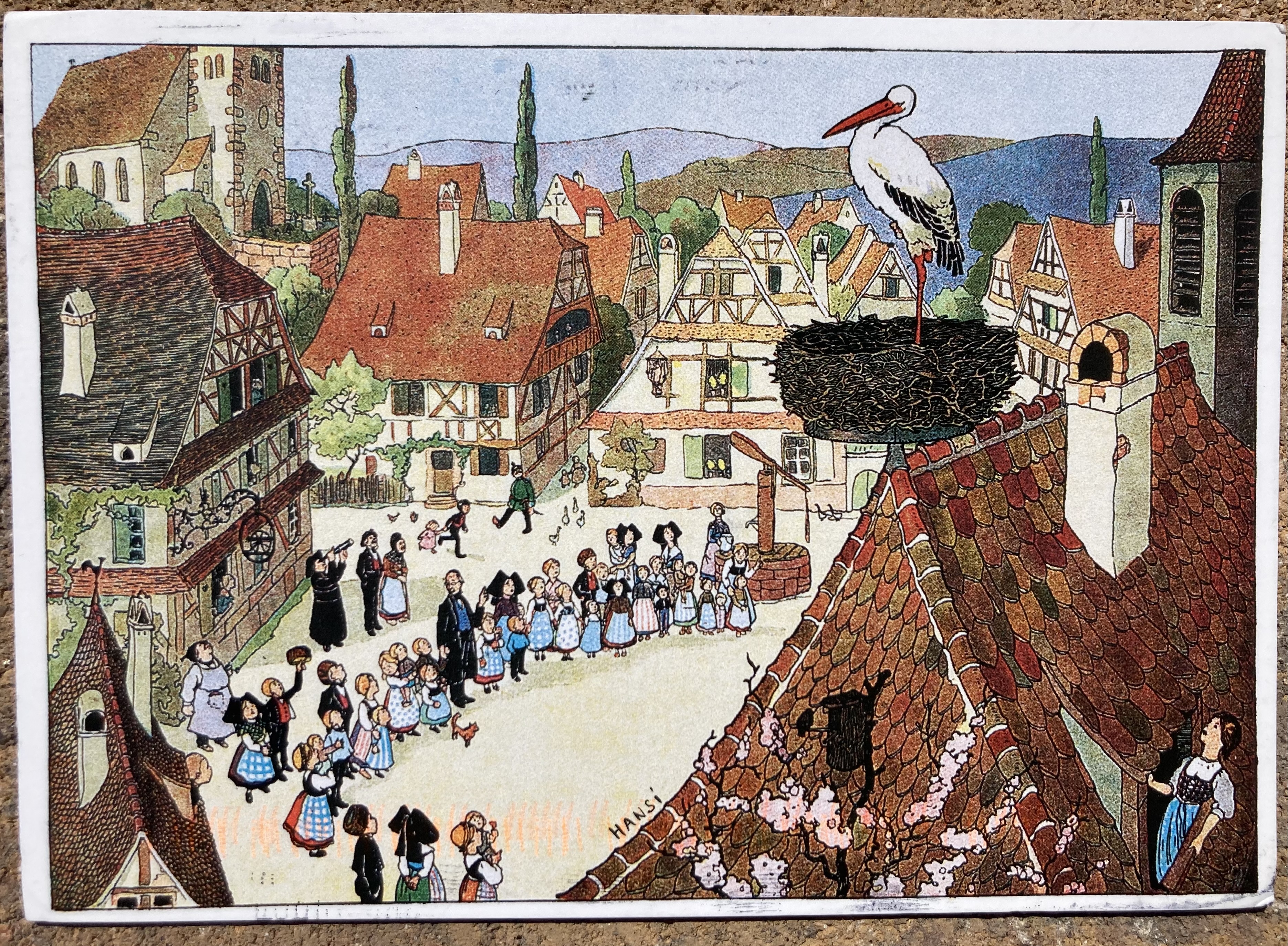
I've received some cool postcards through Postcrossing in recent days. First up is the above card, which features artwork by French artist Jean-Jacques Waltz (1873-1951), who was also known as Oncle Hansi and Hansi. It was sent to me by a pair of secondary school teachers who live in a small village in Catalonia. They write about their postcards on this blog (which you may need to translate to English using Google).

Here are the handwritten notes from the other recent arrivals:

Nadia from Italy writes: "In life I teach art history! I love reading (thriller), painting and traveling!"

Marie, a kindergarten teacher in Hamburg, Germany, who likes to read novels about paintings, sent a card that features this quote: "Cats love people much more than they want to admit, but they have so much wisdom that they keep it to themselves!" 

Karin, a nurse in Germany who is interested in Hildegard of Bingen and loves The Lord of the Rings movies, writes: "Once a year, go someplace you've never been before." That's fun advice. Two places I've been mulling in Arizona are Lake Havasu City (to see London Bridge) and the ghost town of Santa Claus. They're both quite a hike, though. I may need something closer.

Daniel, who lives in Israel and misses attending ice hockey games, writes: "Greetings from Israel! Incidentally, I was born and raised in Arizona. I hope this finds you well."

Sandra, who lives in Germany and likes watching handball matches and knitting socks for homeless people, writes: "Today you find a postcard from Germany in your mailbox. My name is Sandra and I live in Frankfurt. One of my favorite fairy tales is The Little Prince by Antoine de Saint-ExupĂ©ry. Stay safe, happy and healthy."

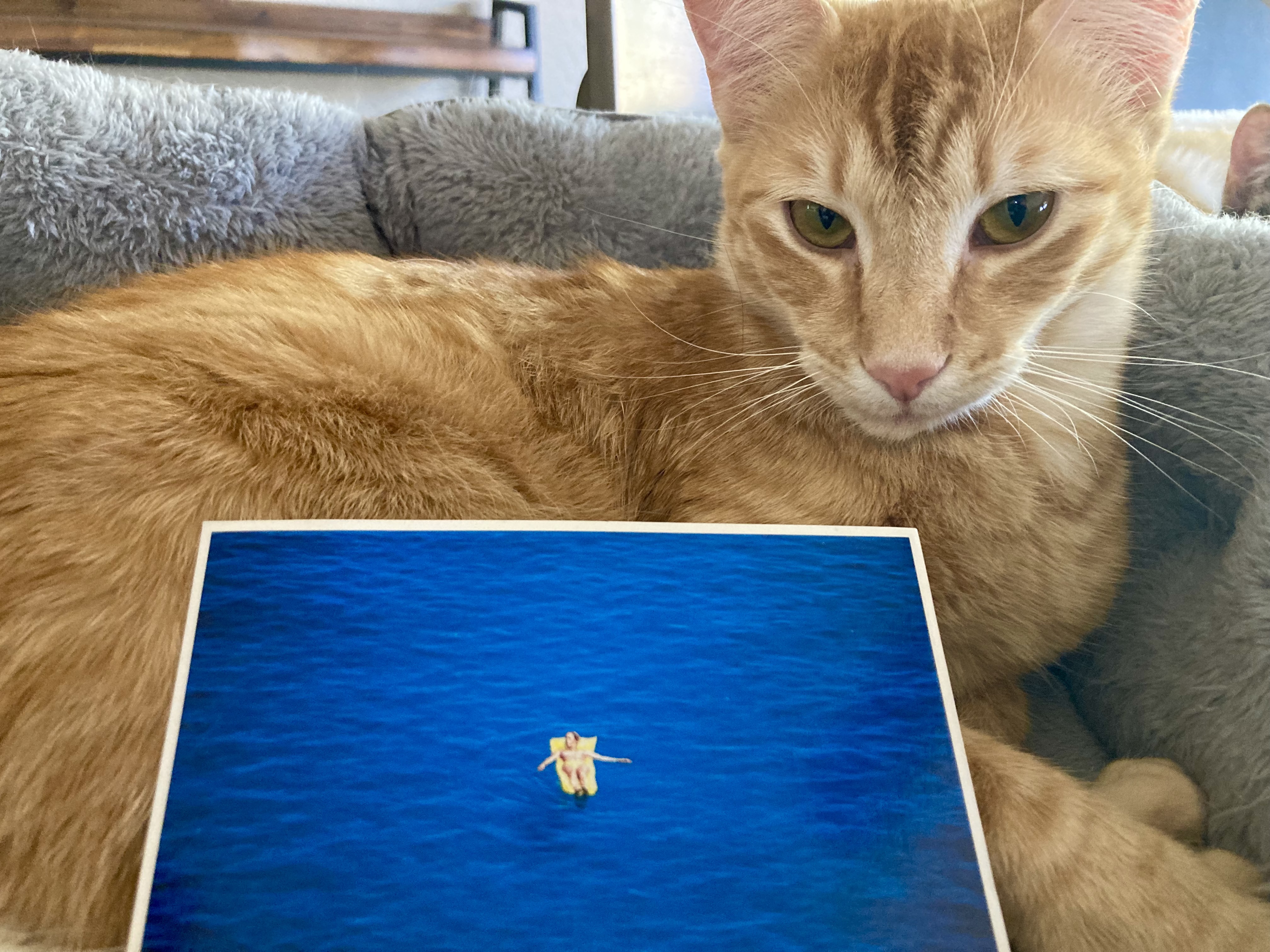
And Bernadette, who lives in Germany and likes postcards of painted snow globes, writes: "I live alone in a small flat in a small village not so far away from Heidelberg. I have a boyfriend. He visits me often. I have no pets because of the small flat and that I work fulltime." Bernadette's postcard is pictured below, with the help of Toffee (aka Toffmeister T).
 

Friday, March 24, 2023

Friday fanzine excerpt:
Anita B. Kimble's poem

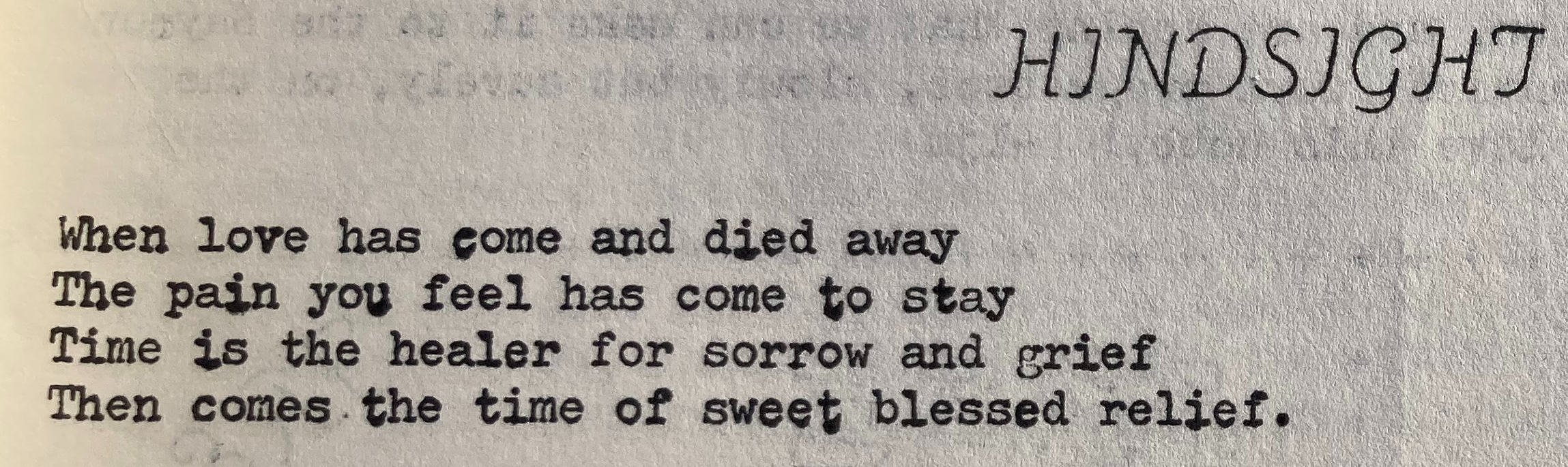
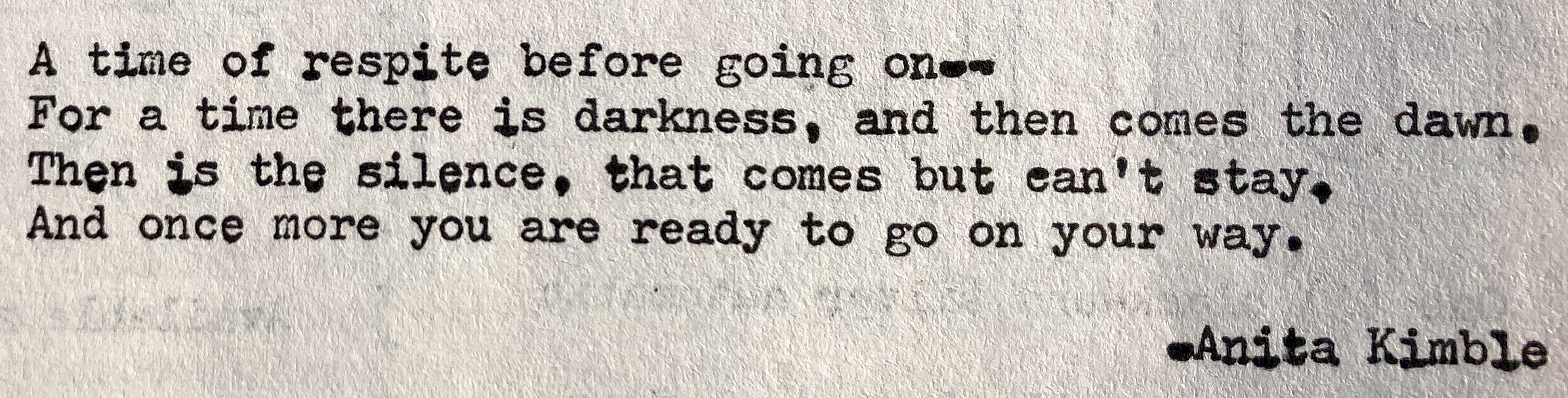
Here's a lost poem from the past. Fifty-five years ago, in summer 1968, the short poem "Hindsight" was published in the 22-page one-shot fanzine "Moonshot" (FAPA 124).

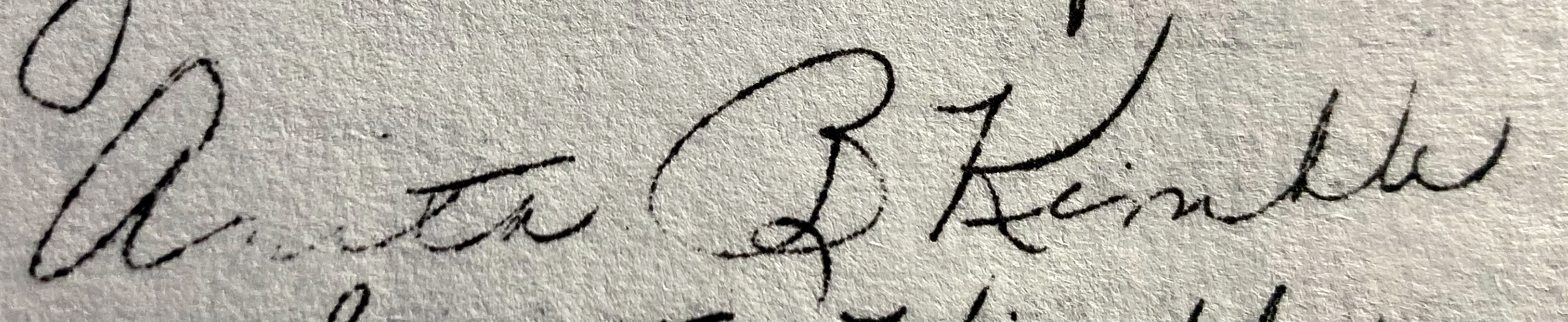
The eight-line poem, which begins "When love has come and died away," was penned by Anita B. Kimble. There are some folks with that name who come up on Google searches, but none that I can 100% tie to being the author of this short piece, so it's a mystery. Perhaps some readers can help out, so that we can more properly credit the author.

Here are some of the other names of creators, many well-known with that era's fanzine community, tied to "Moonshot." I think they can serve as our best possible leads to learn more about Anita: Rick Sneary (The Hermit of South Gate), Len Moffatt, June M. Moffatt, Gail Van Achtoven, Jeremy Konigsberg, Don Fitch, Stan Woolston (J. Stanley Woolston), Ed Cox, Lois Lavender, Ethel Lindsay, Dean A. Grennell, Scott Kimble, Deedee Lavender, Roy Lavender, and Cathy Konigsberg.

Sunday, March 19, 2023

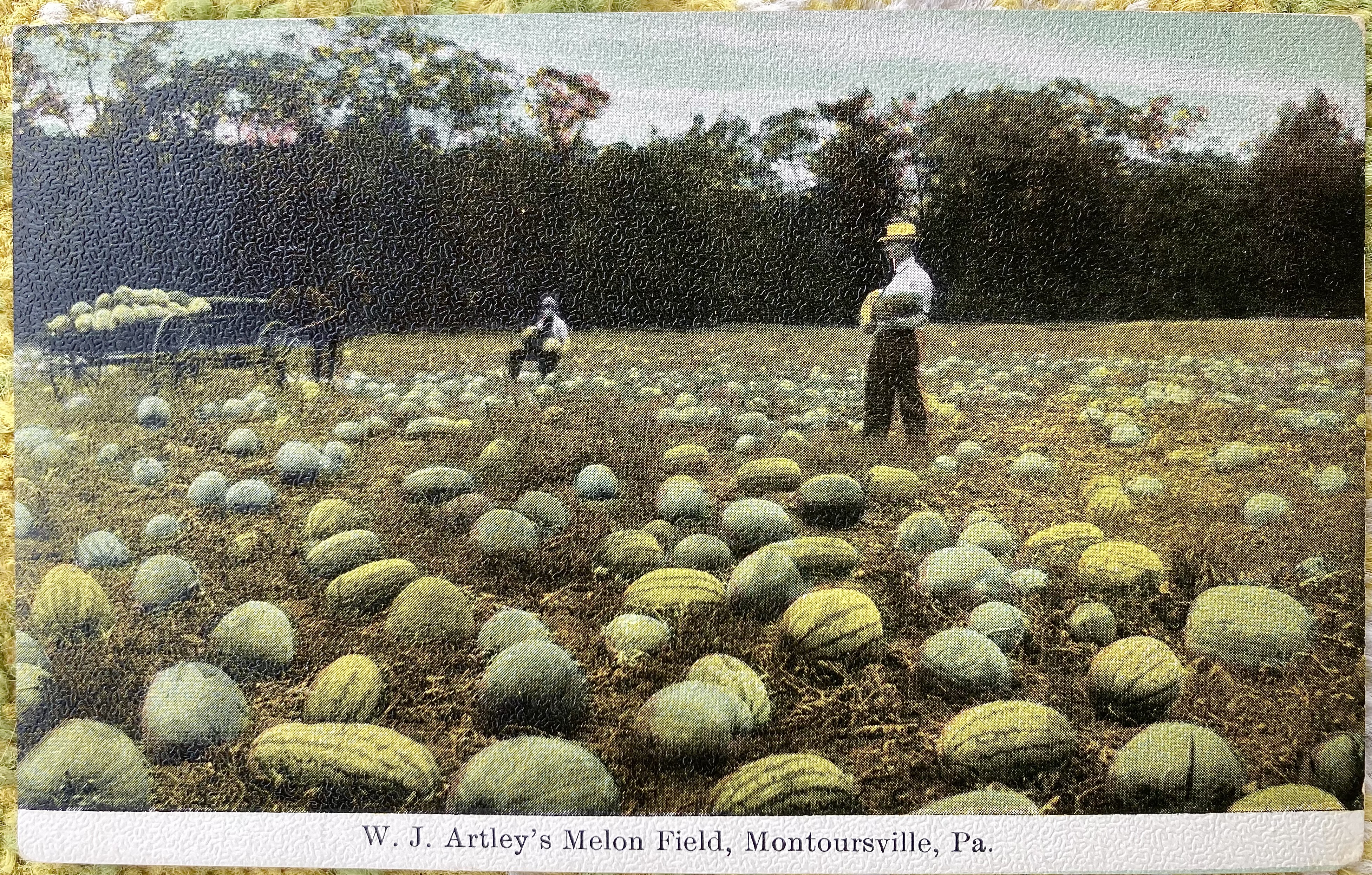
1913 postcard: A melon field in Montoursville (plus ginseng farming)

Here's an old Montoursville, Pennsylvania, postcard that's new to me. As you can see, it's labeled "W.J. Artley's Melon Field." And those are, indeed, a lot of watermelons. Alan Mays posted another one of these cards on his Flickr page recently and states that W.J. Artley is Walter J. Artley (1860-1927), who was born in Tioga County and is buried in the sprawling, hilltop Montoursville Cemetery that isn't too far from the house on Willow Street where I once lived. 

Did Artley later move on from watermelons, or did he try to diversify his farm? I found a couple of Artley references in an old issue of Special Crops, a journal focused on farming of ginseng. Both references are from 1923. 

There's a small advertisement (pictured) and a published letter in which Artley seeks advice to limit crop blight: "Is lime or sulphur, or lime, sulphur and bluestone in a powdered form of a benefit to scatter on ginseng beds in spring before it comes up as a preventative of blight? Or is there anything else that can be used as an advantage to overcome blight? We had a great deal of blight on our ginseng last year and got but very few seed. We sprayed with Pyrox but it did not seem to control the blight. The stem of ginseng would get a brown spot on it and keep this up till the plant would drop down. Is this caused from blight, and what can be used as a remedy?"

The reply directs Artley not to use lime and recommends Pyrox, but states that the best way to fight blight is to have ginseng planted in high shade areas with good drainage and plenty of air. Too much heat and/or moisture will doom the ginseng.

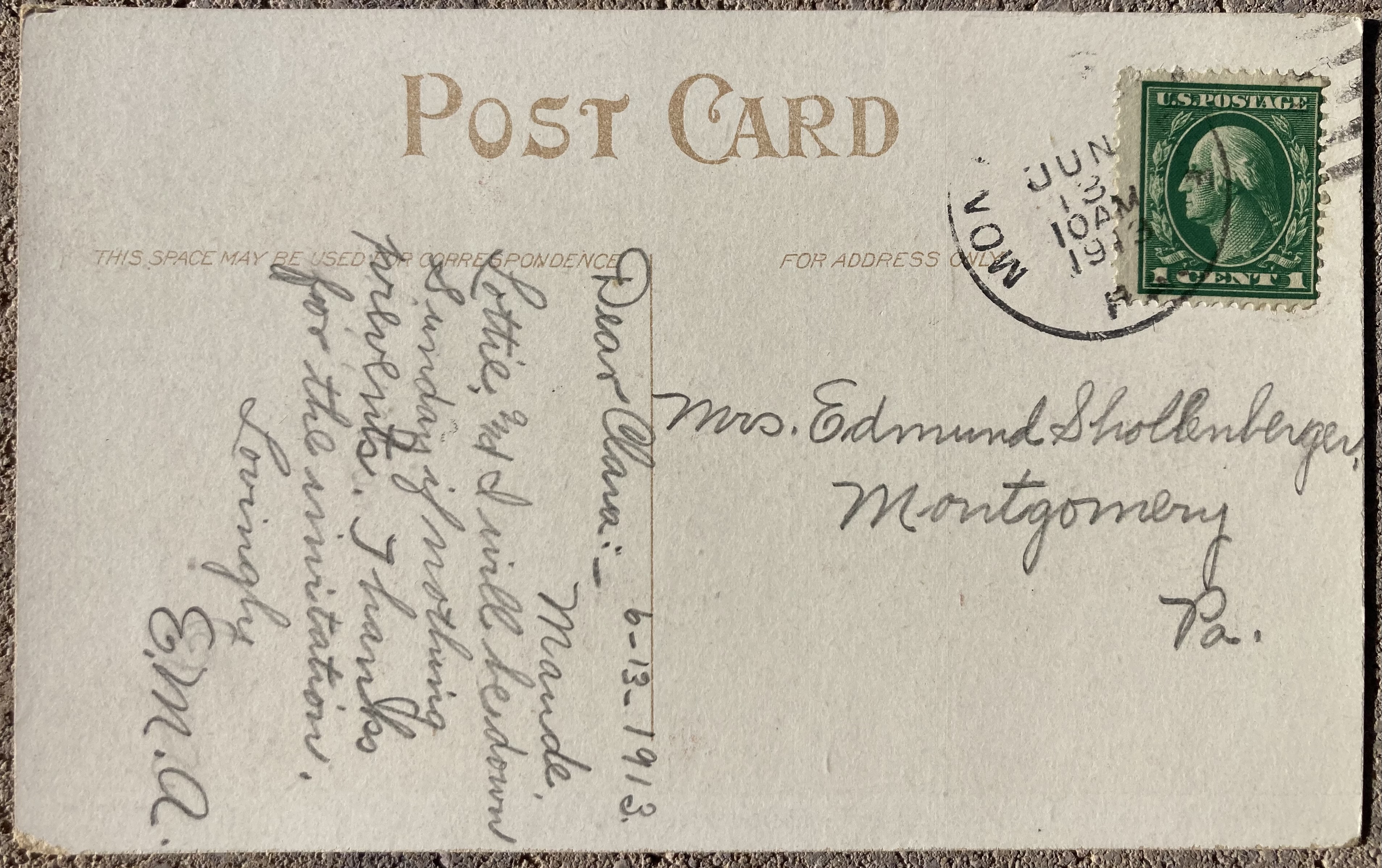
Getting back to the postcard, it was mailed in June 1913 to Mrs. Edmund Shollenberger in Montgomery, Pennsylvania (previously known as Black Hole and Clinton Mills). Montoursville and Montgomery are only about six miles apart (as the crow flies) in Lycoming County. The note states:
Dear Clara: —
Maude, Lottie, and I will be down Sunday if nothing prevents. Thanks for the invitation.
Lovingly
E.M.A.

Monday, March 13, 2023

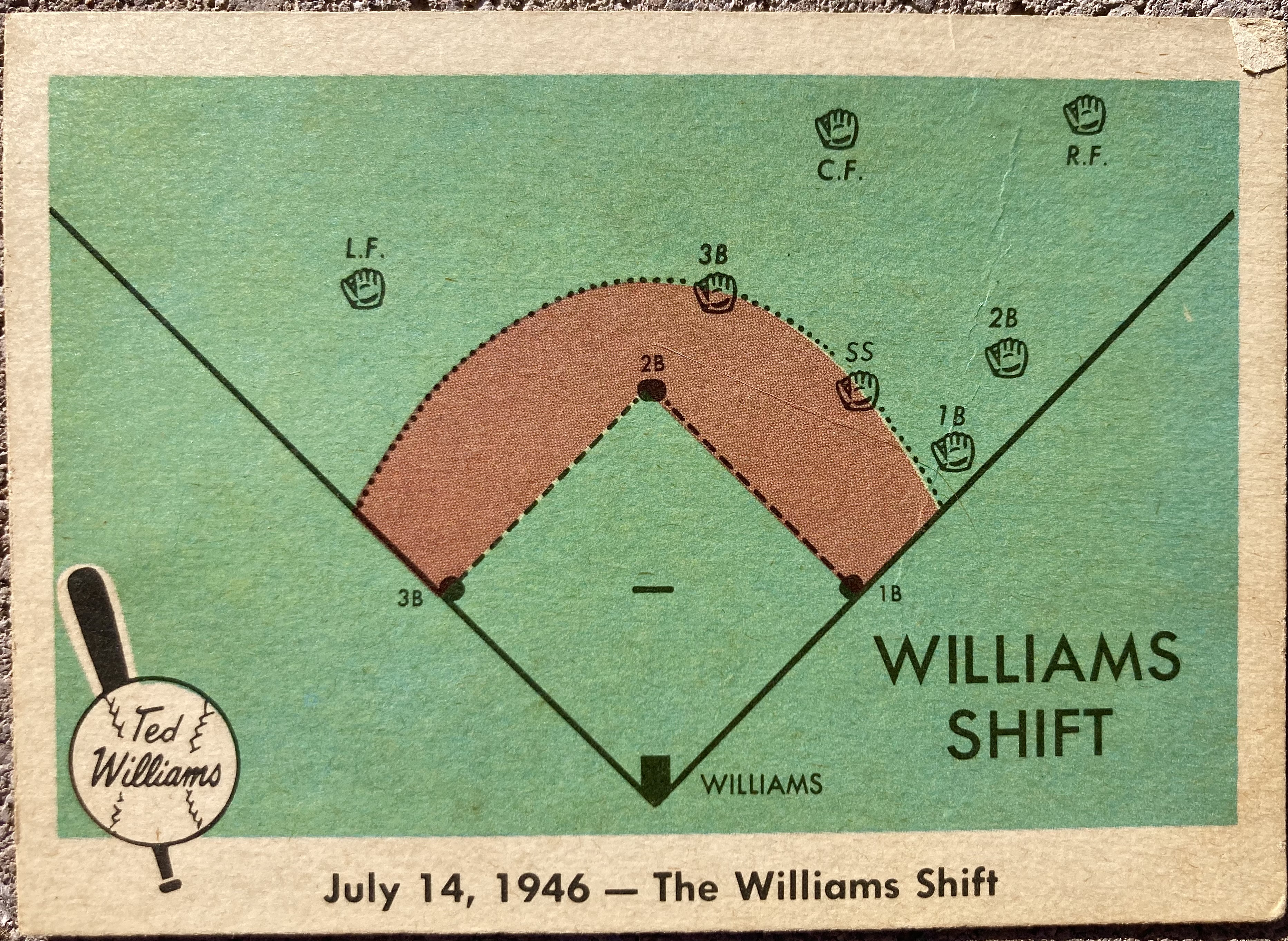
1959 Fleer baseball card showing the "Ted Williams Shift"

We're in the midst of Major League Baseball spring training for the 2023 season. Hope springs eternal. There's even a next-generation revival of the Steve Jeltz Fan Club. (Yes, I know I need to get around to that post.) 

In 1959, Fleer issued a special set of 80 baseball cards about Boston Red Sox slugger Ted Williams. The cards document Williams' life and baseball career, including its interruptions for military service for both World War II and the Korean War. Williams' Hall of Fame career was winding down at this point; he would play his last game for the Red Sox on September 28, 1960.

(Extremely weird aside: Williams died in 2002, and his head currently resides in a Scottsdale, Arizona, cryogenics facility 60 miles northwest of my house. The whole story is extremely bizarre. Google it, if you must.)

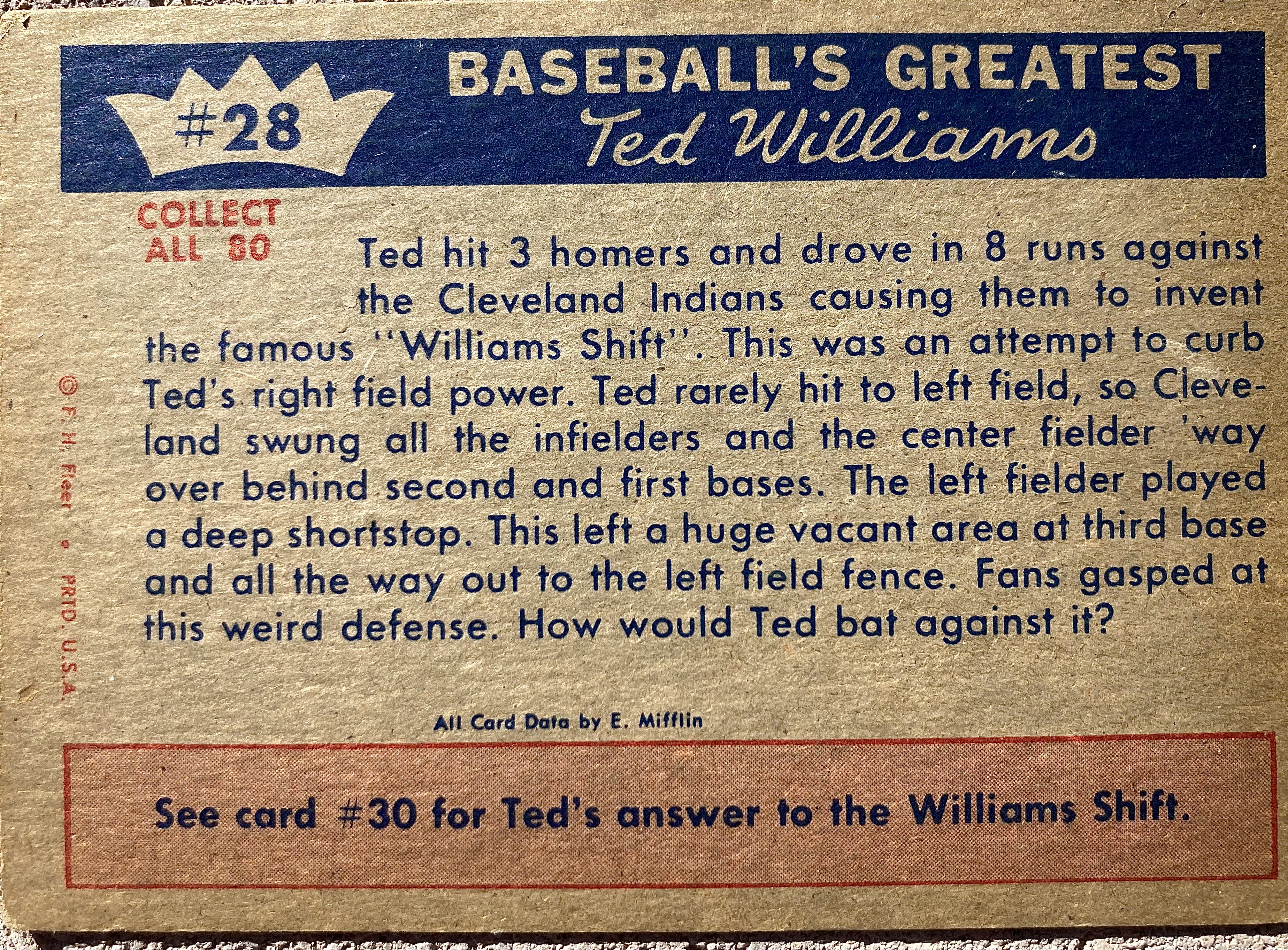
This card, #28 in the series, documents the Ted Williams Shift, which was used by opposing teams in a desperate attempt to limit the damage done by the Splendid Splinter, who had a redonkulous lifetime OPS of 1.116. The front of the card shows where some teams would position their fielders when the left-handed Williams came to the plate. On the back, the card states, "This was an attempt to curb Ted's right field power. Ted rarely hit to left field, so Cleveland swung all the infielders and the center fielder way over behind second and first bases. ... Fans gasped at this weird defense. How would Ted bat against it?"

For the most part, teams' usage of the extreme defensive shift did little to stymie Williams' excellence, though the shift was moderately effective in the 1946 World Series (when an injury was more of a factor in Williams' performance).

The shift has been used over the years against other superstar left-handed hitters who tended to hit the ball to right field. A 2017 article on FiveThirtyEight explains how the shift especially thwarted Philadelphia Phillies slugger Ryan Howard.

This season, such extreme defensive configurations will not be allowed in Major League Baseball games. According to a February 1 article by Anthony Castrovince on MLB.com: "The defensive team must have a minimum of four players on the infield, with at least two infielders completely on either side of second base. These restrictions are intended to increase the batting average on balls in play, to allow infielders to better showcase their athleticism and to restore more traditional outcomes on batted balls."

The prohibition on extreme shifts is part of a package of significant rule changes for the upcoming season, which include a pitch timer meant to speed up the pace of game. Baseball is constantly evolving. It will be interesting to see how these new rules affect play in 2023.